“There are two sides to every story,” the saying goes, leading to the conclusion that a wise man considers both sides before making a decision. But when it comes to American politics, the “both sides” ideology is likely the most counterproductive style of rhetoric, and it’s certainly the most effective talking point for one of those two sides. How could “both sides” be the best talking point for only one of two sides? I’ll explain…probably in a few posts.

Both Sides - Wikipedia

Let’s start by exploring one of the most problematic aspects of bothsidesism: it’s an easy way for bad actors to drag others down with them into false equivalency. They know that good-natured people 1) want to be and appear objective, and 2) don’t have enough time to investigate nuance. So a single snapshot of “look, they do it too!” is generally enough to convince the impartial masses that both sides are awful — and in doing so to let the worst offenders off the hook.

Keep in mind: “both sides” commentary is always negative. Admit it, you’ve never heard “both sides love America so much!” or “both sides have such great ideas to raise our standard of living!” When you hear the phrase “both sides” it’s always attached to something like:

  • “Both sides are terrible; we need new candidates”
  • “Yeah that was awful, but both sides do awful things”
  • “We have a two-party system and both sides are bad; why even bother?”

To see why this is a built-in advantage for bad actors, let’s step away from politics and into something less controversial and even more universal: childhood squabbles. Whether you’re a current parent seeing this in real time or just a former child who remembers how it went down, answer me this:

Which kid is the one saying “yeah but he did it too?”

It’s always the kid who got caught, and it’s usually the kid who did most or all of the misbehavior.  The kid who punched wants to point at the kid who shoved; the kid who hair-pulled wants to point at the kid who name-called. They know they’re guilty, but they want to 1) distract and 2) spread the punishment.

Of course, adults do the same thing with higher stakes. Suppose you have two mechanics in town, one who knows he routinely fixes things – an charges for – things that don’t need fixing, and another who is totally honest but due to caution occasionally recommends a service that’s useful but not wholly necessary. Which mechanic stands to benefit more if the general consensus around town is “all mechanics are the same…they all overcharge you, but what can you do?”  

Simply put: when it comes to bad behavior, “both sides” is the rallying cry of the notably-worse side.  

This manifests itself all the time in politics, and one of the all-time great examples is transpiring as I type this. Over the past few days since Wednesday’s Trumper invasion of the U.S. Capitol – the insurrection in which five people were killed, and the Capitol was occupied by an overthrowers for the first time since the War of 1812 – the “Both Sides” militia has been hard at work trying to excuse or at least sanitize the attacks by comparing them to liberal protests, namely the Black Lives Matter protests of this past summer.

Fox News coverage of the Trump riot shows the network isn't changing —  Quartz

And, of course, that’s a classic case of “bothsidesism” as a way to drag better actors down to the level of the worst actors, and to distract from the truly awful acts by pushing the focus elsewhere. The “Coup Klux Klan” attacks of Wednesday and the BLM protests of the summer were vastly different and should be seen uniquely for what they are and for what they each mean to American political discourse. Let’s examine those major differences: 

1) Fact vs. Fiction.  

The BLM protests were about *actual* murders that definitely occurred, many on video, and that are universally known as fact. George Floyd was killed on video we all saw. So was Jacob Blake. Brionna Taylor’s killing was an undisputed fact in court cases; the police acknowledge they did it, but just dispute their legal culpability.

“Stop the Steal” has had two months and 60+ legal cases to produce evidence and hasn’t produced any. The votes have been certified by bipartisan committees and canvas boards.  Stop the Steal is a lie. BLM protesters were speaking out against actual lives being lost; Trump seditionists were rioting to overturn an indisputable election result.

2) Proportional Criminality. 

The BLM protests were peaceful, lawful demonstrations amidst which violence and destruction emerged as the edge case; for Wednesday’s insurrection, illegality was the norm. To illustrate, let’s give each event the same proportion of “people who damaged property” and call it 98% no, 2% yes. That would mean that 98% of BLM protesters were completely within their First Amendment right to peacefully assemble and march on public land. Then a handful of outliers wrongfully broke windows, lit fires, etc. but the vast majority acted completely within both the law and the traditions of American activism. 

For Wednesday’s Trump event, every single person who breached the Capitol was unlawfully trespassing on restricted property–and they knew it. It’s 100% clear that if you break open a locked door or push past a line of law enforcement to reach a restricted-access destination, you’ve done something wrong. That’s abundantly obvious – you don’t jump on the field at a minor league baseball game or sneak through a back door at a movie theater, so of course you can’t break a window or bowl over a police officer at the U.S. Capitol.  

So for BLM protests, call it 98% law-abiding, 2% in the wrong.  For Wednesday, using the same proportion, you’re looking at a much higher percentage (30%? 50%? I honestly don’t know how many breached the Capitol vs. waved flags on public property, but it was easily thousands) who are outright criminals.

3) Accountable Leadership.  

Listen, every protest group – and most pro sports championship celebrations, too – has its adrenaline junkies who just want to break stuff. There was damage from BLM protests just like there was from Wednesday’s attack. A massive difference, however, is in how the grownups in the room acted – and that’s a crucial distinction, because no one’s asking anyone to vote for d00bieloverr69 from 4Chan or Reddit, but we are regularly asked to cast votes for each party’s leadership.

More continues to come out about Republican President Donald Trump’s role in organizing, encouraging, and enabling Wednesday’s riot. We know he egged on his followers to fly to DC and be part of the event, noting “it will be wild.” We know he refused to approve the National Guard to keep the peace even as things became a riot. There’s evidence that he fired key Pentagon personnel to ensure that Capitol Police – including the officer murdered by Trump rioters – wouldn’t have riot gear or other protective equipment. And of course he chose the date and time to coincide with election certification, and chose the rhetoric that sent the mob to interrupt it. 

So let’s go apples-to-apples: find me evidence of any living Democratic president – Carter, Clinton, Obama, or Biden – calling for insurrection during the BLM protests. High-ranking, presidential-hopeful GOP senators Josh Hawley and Ted Cruz egged on the “Stop the Steal” sedition even after the violence had gotten out of control. Find me a parallel Democratic senator and presidential hopeful who did the same during BLM – did Amy Klobuchar do it?  Did Elizabeth Warren? Did any state or national level Democratic Party official communications encourage their constituents to be ready to die for the cause, like this one did?

Image

Then move down to on-the-ground leadership; during BLM there was lots of video of march organizers imploring the bad actors to stay peaceful. Was there anyone of any authority on Wednesday doing the same? There are even verified messages on the right-wing Parler app from prominent “Stop the Steal” attorneys calling for the assassinations of sitting legislators. By all accounts, the violence at BLM protests was caused by small groups of rogue actors, committed against the wishes of the organizers and the vast, vast majority of the crowd; at the Stop the Steal riots, violent intimidation seems to have been an integral part of the plan and a central rallying point among the crowd.

4) Counter-Escalation. 

Despite what Hannity and others desperately want you to believe, the FBI has made it clear that there’s no evidence that “Antifa” or any other left-wing groups infiltrated Wednesday’s attacks to make them more violent. Over the summer, however, several members of right-wing extremist groups (Proud Boys, Boogaloo Boys) were arrested and charged with setting fires and destroying property; at many events, they attended wearing their logos and flying their flags in an outright attempt to fan division and incite conflict. 

What does that mean? A significant portion of the violence and destruction that Bothsidesers want to pin on “but the BLM protests were violent” was committed by right-wing extremists, who expressly committed those acts to provide the impression that liberal demonstrators are violent.  No such acts were necessary for Wednesday’s riots; they were plenty criminal of their own accord.

Conclusion

If you’ve read this far, my main intent is this: it’s a deliberate, recurring tactic of right-wing bad actors to find a snapshot of ‘the other side’ doing something related, and then rely on your busy schedule and desire to remain impartial such that you take those snapshots and think “well but both sides do it.”  But proportionality and severity don’t just matter; they’re critical. I’ve driven in excess of the speed limit and jaywalked between intersections, while Jeffrey Dahmer murdered and ate dozens of people. “Both sides” are technically lawbreakers, but that doesn’t mean (I hope) that he and I are equivalently criminal.  

“Both sides do it” is *exactly* what the worse of the two sides – in any dispute, not just politics – desperately hopes everyone believes. The basketball team that plays dirty doesn’t need to convince you that they’re angels, but if they can get the referees to think “it’s been physical on both sides” then they won’t get called for all the fouls they should. The business that gets you to believe that “all businesses gouge you with unexpected fees” now has a license to gouge you with unexpected fee–you may not like it, but they’ve conditioned you to expect it. 

I’ll dig deeper on other issues with bothsidesism in future posts, but let’s end here with this. “Both sides” isn’t a virtue of impartiality. It’s a tactic used by bad actors to get you to think you’re being noble and impartial while you provide cover for their bad actions. At best, “both sides” prevents would-be-referees from seeing the chasm between frequency and degree of wrongdoing; yes, President Clinton lied about his affair with Monica Lewinsky so he lied just like Donald Trump lied about the severity of coronavirus. But Trump’s lies were relentless throughout 2020 and are a predominant factor in the deaths of 400,000 Americans and counting. Frequency and degree matter! 

What’s far more nefarious and troubling is when the bad actors know that their actions will be sanitized through the lens of “both sides.” It’s easy to think of “both sides” as a noble, objective lens through which to view politics, but to a malevolent actor, it’s a great way to escape accountability and scrutiny. 

As I write this on July 5, fires rage across the country and people find themselves without homes. Hundreds of thousands of young children and their parents have endured a month of sleepless nights, and millions of pets and wildlife creatures have spent the last month  tortured by explosions. All because of America’s love of do-it-yourself fireworks. It’s a beautiful Sunday afternoon in most of America, so quiet picnics and babies’ naps will be interrupted by Harley riders revving their engines on Main Streets everywhere. And it’s a day that ends in “Y” so at least a few children will lose their lives to stray or accidental bullets. America is not without its share of problems, but many of them stem from one simple fact:

Vroom and boom are leading us to our doom.

Here’s what I mean: a great many of our problems all stem from the combined facts that:

  1. Grownups should quickly age out of an unhealthy love for things that go “vroom” and “boom.”
  2. In concert with that, as we age we should develop more and more consideration for others and restrict our activities accordingly.
  3. But the United States is plagued by arrested development in both phases.

Let’s dig in.

Section 1: Stunted Psychological Development And Things That Go Vroom & Boom

Much like Freud has his stages of psychosexual development and acknowledges that some people can’t seem to move out of stages (e.g. an anal-retentive personality), there’s another stage that we should all grow out of but many don’t: the Vroom & Boom stage.

At some point in our adolescence through our 20s, it’s perfectly normal to love things that go vroom and boom – whether literally (fireworks and explosions, motorcycles) or figuratively (loud, angry music; look-at-me clothing; crowded places with neon lights). We’re announcing our arrival in the world – look at me! listen to my music! – and expressing our independence having spent our lives with our decisions being made for us by parents and teachers.  

The Vroom & Boom stage comes with aggressive music played as loudly as possible – a teenager wouldn’t dream of pulling out of a driveway or parking spot without the volume turned up to 11. It features bars where you can’t hear someone talk without shouting, it’s big trucks or fast cars or motorcycles and at least a few gear shifts between stoplights even if they’re less than 200 yards apart. It’s driving a few hours to get south of a state border to buy the fireworks or grain alcohol that your state deems too dangerous for human use. Whether beach or ski slope or hiking trail, it’s made better by a bluetooth speaker and as many cheap beers as you can carry.

But by a certain age – generally late 20s into early 30s – we should see our love of Vrooms and Booms decline. We’re seeking peace in our lives: the book is now better than the movie and you enjoy early mornings more than late nights. Beaches, ski slopes, and hiking trails are where you seek solitude – they don’t need a live-action soundtrack. You’d vastly prefer a reliable sedan in a muted color to a sporty car or truck with flames on the side, and sometimes you turn off the radio just to drive in silence and explore your thoughts. You lean toward sailboats versus power boats; a quiet restaurant in the Village versus a Hard Rock Cafe in Times Square; a pedal bike versus a motorcycle.

Simply put: if you’re 17 you’re perfectly justified in spending all summer trying to get on a jet-ski. If you’re 40 and that’s your summer, you’re a total caricature, like Eastbound & Down’s Kenny Effing Powers. 

HBO - Kenny Powers of Eastbound & Down at 1AM on HBO Comedy | Facebook
Things that make you go vroom

We all instinctively know this. When a man in his 40s buys a sports car or gets a tattoo, we call it a midlife crisis and look at him with equal parts scorn and pity. And if he shows up at a go-kart track without his kids or at a Spring Break bar, well, in any capacity, we look at him even more skeptically. Vroom & Boom pursuits are a young person’s game.

Which doesn’t mean we all have to listen only to acoustic sets and watch only documentaries in our 30s on our way to becoming literature professors at Bryn Mawr by our 50s to have lived an age-appropriate life. But over time, we should naturally wean off of our love of things that go vroom and boom. That graph doesn’t have to hit zero – there’s always room to relive your teenage and college passions or to enjoy flashing lights and loud booms with your kids – but unless your psychological development has been arrested in the Vroom & Boom zone, it should have a noticeably negative slope. 

Section 2: Consideration For Others

Here’s the big thing about adulthood and maturity. Your Vroom & Boom slope may be steeper or relatively flat – no matter how strange I might find you, you’re not an inherently maladjusted adult just because you really like the sound of a Harley-Davidson sputtering as you give it gas in neutral, or because you love the powerful feeling of pulling the trigger of a gun. We all, to varying degrees, have some kind of vroom and boom we enjoy – songs from college we crank up in the car while we’re alone, for example. But take heed of that phrase “while we’re alone.” Because while your Vroom and Boom line shouldn’t define you as a person, the way it combines with another, crucial trendline, is massively important. 

As we age, we should see a steep increase in the amount of respect and consideration we give to others. 

A 50-year old who still gets childlike enjoyment from watching Independence Day fireworks might come off a little weird but he’s totally harmless. But a 50-year old who spends most evenings in June lighting off fireworks – particularly in a neighborhood or in a dry area – is just a jerk. Why? Because those fireworks have negative effects on many others. Their pets or toddlers may be tortured by the sound; the debris may litter their yard or potentially catch fire on their roof, or light up a hillside and force evacuations and home losses. An adult absolutely should take those things into consideration, and the only possible conclusion a reasonable adult can draw would be “the tiny amount of enjoyment I will get from lighting a small fire and watching this object go boom is not at all worth the significant inconvenience that I will force on dozens/hundreds of my neighbors, and then once you factor in the measurable risk of injury or property damage it’s insane that I’m even considering this.” 

But, of course, across America the last month tens of thousands of fully grown men and women have decided otherwise, that their personal enjoyment of a phase they really should have long grown out of outweighs the concerns of their neighbors. And therein lies a massive national problem. Our national graph should look like this:

Where parental involvement halves the amount of damage done by that triangle at the left (my hormone-addled desire to go boom outweighs the amount that I care how it affects others), and self-restraint keeps adults in the triangle on the right. 

What should happen is that:

-Vroom-boomers who love motorcycles generally avoid quiet neighborhoods and Main Streets, taking care to quiet their engines as much as possible until they’re on the long, open road where they can enjoy the vroom without waking babies, setting off car alarms, and in general annoying everyone but themselves and the thrice-divorced career temp riding on their back. 

-Hunters live in sheer terror that their guns will fall into the hands of precocious children, so they minimize and securely lock up the firearms they own – or refuse to store them in a home where children live or visit and instead simply rent them on their occasional wilderness hunting trips far from civilization.

-The idle rich address their boredom with philanthropy or travel or really anything other than going to exotic locations to kill elephants, lions, and giraffes, knowing that the preservation of these magical animals is paramount to the pride of their local countrymen and allows for future generations to enjoy the splendor of the natural world. 

-And much, much more! We should all be governed by a healthy amount of fear that a trivial amount of enjoyment for ourselves could come at the expense of significantly more discomfort or danger for someone else. While seated the able-bodied among us should constantly be scanning our train car or the seating at our airport gate looking for the elderly or pregnant who might need a seat; while parking, we should take the spots further from the store to ensure that the prime spots are available for parents escorting young children or for older shoppers pushing heavy carts. We should take Lyft or Uber any time we’re planing to have a few drinks, we should watch our language when children are nearby, we should speak in library voices on airplanes – we should approach communal situations with an understanding that if everyone treats each other how we’d like to be treated, then it’s a positive experience for everyone.

But if American Exceptionalism is really a thing, it’s this: we are exceptional at loving things that go Vroom and Boom, and we’re exceptional at prioritizing the most marginal of happiness or convenience for ourselves at the expense of the safety or well-being of others. 

Enjoy hunting? Not my cup of tea, man – I think you can enjoy the outdoors by hiking or cross-country skiing or a whole lot of things. But do you in a way that’s safe. But of course that’s not enough: gun enthusiasts have to open-carry strut around capitol buildings and town squares and fast food restaurants frightening and intimidating real people because “I like boom so you’d better deal with it.”  

Enjoy motorcycling? Who doesn’t love the wind in our hair and the feeling of two-wheeling down an open road (you know there’s a motorless type that can help with fitness, too, but you do you) – but when you roar your engine while stopped at a traffic light in front of an outdoor cafe, it’s less about feeling free and more about just being a dick (or whatever South Park may brilliantly deem you).

Enjoy fireworks? Roll out a beach blanket and enjoy the show on the Fourth! But if your plan is to, as The Simpsons said, “celebrate America by blowing up a small part of it,” you’re putting “Me, The Boomlover” way ahead of “We The People” – that’s not patriotism, that’s selfish pyromania. 

Section 3: Vroom and Boom is causing our doom.

Now you might be thinking that loud noises aren’t necessarily doom, so where does the title come from? Think of some of the biggest problems America is dealing with in 2020:

COVID-19 (we lead the world!)

Gun violence (we lead the world!)

Police Brutality (if we don’t lead, we’re close)

Intense political polarization

They all directly related to our culture of Vroom-and-Boom. 

Gun violence really just comes down to the fact that the U.S. has long prioritized things that go boom over public safety. No other country in the world deals with anywhere near this kind of gun epidemic, but the NRA and the Republican party side with the boom over the logical. No matter the severity of the massacre, the innocence of the victims (Sandy Hook proved it: if kindergartners being mowed down by a madman didn’t lead to change, what will?), or the massive running total of the death count, the steadfast cry from the right is to never compromise, always prioritize the thing that goes boom.

Police brutality is similar – we so love things that go boom that we’ve militarized our police forces with tanks, riot gear, military-grade weapons, and an us-vs.-them mentality. And of course the police recruit largely from a pool of “people who like things that go vroom and boom” – people who want to carry guns for a living, flip the lights on and drive as fast as they want. The general sentiment in media is that the desk job of policing is for losers – the real badasses are breaking the rules on the street. We created a “war on drugs” so that there would always be bad guys to go after – rather than address the demand for drugs with counseling and medical care, we labeled it a “war” and turned thousands of wannabe Rambos into drug warriors who solve problems by making them go boom. 

As for political polarization and COVID-19 – Donald Trump is the ultimate noisemaker for people who like stuff that goes vroom and boom. Like a firework or an idling motorcycle engine, he loudly blows off hot gases with no real purpose other than to delight those who like loud, obnoxious sounds. So when he spouts off that a dangerous disease is a hoax or that masks are for the weak, the Vroom-and-Boom crowd rejoices – they get to yell and scream against masks and distancing, and now we’re the only modern country that hasn’t gotten COVID under control. And because the Vroomer-Boomers relish in the small pleasures that come at the inconvenience of others, we’ve arrived at a political chasm where compromise or even seeing eye-to-eye is impossible: like a motorcyclist revving it up next to picnickers or a gun nut open-carrying an AR-15 into Quiznos, a great many Trump supporters have no agenda other than “let’s piss some people off.” Because of course that’s the Vroom-and-Boom way.

So this weekend, as some nurse fireworks injuries and many celebrate American Independence, take note of the true meaning of American Exceptionalism. We’re #1 in gun deaths, #1 in Coronavirus deaths, and #1 in per-capita air pollution. All because, no matter who it hurts, we love things that go Vroom and Boom.

IMG_0651

It was a wonderful 14 years, Dodge!

Some background on me: I’ve been contributing at least 10% of each paycheck to my 401k since I became eligible. I drove my last car for 14 years before trading it in.  I take all our bottles and cans – plus those from my office – to the recycling center to get the deposit back (why throw away free money?), and I’ve been part-time tutoring at least 100 hours a year for the last 15 (why pass up easy money?).  My favorite part of each month is moving money from checking to savings and from savings to investment accounts.  I’m as conservative as they come when it comes to money.


I’m also a white homeowner with gray hair, a masters degree, and an investment property.  I must be a Republican, right?

No.

Not even close.

I’m a democrat.  And that’s because I’m conservative.

Here’s why: conservative means living slightly below my means today to maximize my ability to live comfortably in the future.  And democratic policies do exactly that: they invest in conserving the environment, they ensure healthcare, they protect the financial system from boom-and-massive-bust cycles.  Conservative is the opposite of risky: a daredevil might ski jump without a helmet or trapeze without a safety net.  Me? Give me a seat belt, a guard rail, and an FDIC-insured (thank you, FDR!) bank account.  I may not feel as much adrenaline or make quite as much profit, but I know I’ll sleep well at night. And that’s why I vote Democrat, too.

Much of what makes me conservative is concern about the circumstances that could become a catastrophe.  So for example:

Healthcare: When I aged out of my parents’ health insurance, they had a pretty frank talk with me.  No matter what I did – more school, a stable job, something entrepreneurial – I had to have health insurance, because if I didn’t and got sick or hurt, they’d feel obligated to help me and it could wipe them out.  And that stuck with me: no matter how hard you’re working, how much money you’re saving, how valuable you are to a company’s success – one accident, one diagnosis could change all that.  And it’s not just to you – you can use all the hand sanitizer in the world, say no to bungee jumping and downhill skiing, and eat all the kale and none of the meat your heart desires, but if you have a child born with a pediatric health condition, none of that matters.  One bad diagnosis to you or someone you love – particularly if it means that a chief breadwinner can’t work, which could mean that the family’s access to our employer-based health insurance system is gone – could wipe out a lifetime of savings in a few months.

So my conservative nature has me very much in favor of a health insurance system that would protect me, my wife, and (someday) my children from being discriminated against for pre-existing conditions or from losing our access to care if I lose my job.  And the capitalist in me likes the idea of 1) not burdening small businesses with employee healthcare costs and 2) allowing employees the freedom to move between companies or start their own businesses without fear of losing coverage.  Even if it costs a little more in taxes than it currently costs me and my employer to cover me, my conservative nature says let’s find a plan that gives all of us the secure feeling that our families – and as a result our live savings – will be safe.

Banking regulation: I’m a conservative investor. I keep my money in mutual funds and not individual stocks, for example, because I want to make money without taking on undue risk.  For that same reason in the financial system I support regulations on the banking industry.  Whether it’s because of quarterly bonuses or the fact that their banks are too big to fail, I know that financiers want to bet as big as they can…but as we saw in 2008 those bets can lead to catastrophic consequences for the global economy.

So I want smart, effective regulations, particularly since my tax dollars went to the last bailout and would be used for the next one.  I’ll take the slight short-term hit on the performance of the banking stocks that are undoubtedly in my mutual funds – I want to ensure that those banks don’t go Lehman/Merrill…not just for my portfolio’s sake, but for our entire economy’s sake.

The environment:  Shoot, one of the biggest terms related to environmentalism is “conservation.”  And to me being conservative means that if the vast majority of the scientific community tells me to take precaution, I take that precaution, whether it’s wearing sunscreen, not texting while driving, or limiting climate change.  Yes, not taking those precautions against climate change allows coal and oil companies to earn record profits…but it could also mean that several times a year we’re rebuilding entire cities devastated by record hurricanes and wildfires.

Listen, I’m conservative.  Tax me a few extra cents – shoot, a dollar – per gallon of gas to fund alternative energy research and development.  Add some additional cost to new cars (I mean, it’ll be another dozen years before I buy one) because you forced manufacturers to hit ambitious fuel economy standards.  An ounce of prevention is worth a pound of cure, we risk-averse types like to say.

Gun control. Yeah I know the NRA saying that “the only thing that can stop a bad guy with a gun is a good guy with a gun,” but here’s my take: I do not want to own or carry a gun. There are all the stories of toddlers killing their parents or each other, and the statistics about how guns are more likely to kill a loved one than an intruder.  I just don’t want that responsibility: if I had a gun, particularly if I had kids, it would be locked up so securely that I’d never get it out in time if I had to, anyway.

Again, it’s risk-aversion: every gun that’s in my house, or my kid’s teacher’s desk, or anywhere like that puts me or someone I care about in a room with a deadly weapon.

And the list goes on: to me it’s conservative to favor early childhood education because I think it’s better to pay for schools now than for the consequences (jails, welfare, crime) later. The same is true for mental health coverage.  I think it’s conservative to invest in our infrastructure – roads, bridges, rails, airports – a little at a time now rather than deal with larger catastrophes later.

Don Jr Silly Hat

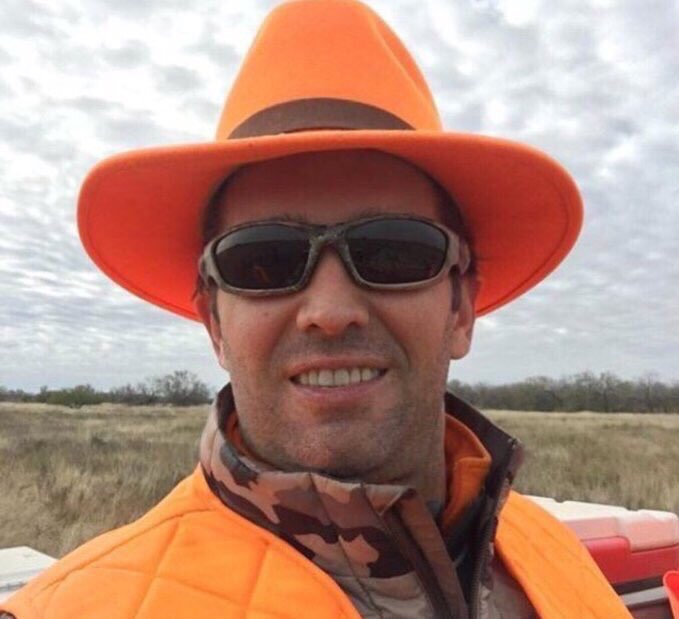
The best thing about not being rich?  Not being able to afford Don Jr.’s getup.

Now, of course, you might ask whether this list includes welfare, food stamps, increased minimum wages, and other initiatives that are predominantly for “poor people.”  And the answer is “of course” – listen unless you’re in Mitt Romney’s 1%, you’re probably a hair’s breadth from being in his 47% (the group he famously claimed is addicted to government benefits and pays no taxes into the system).  Whether it’s a health emergency for you or someone in your family, or a 2008-style economic event – a recession that costs you your job and forces you to sell your house at a loss while you’re still paying student loans, perhaps…that’s not that farfetched for many of us – 98-point-something percent of us are way more likely to be thankful-for-democratic-safety-nets poor than benefit-from-GOP-tax-cuts rich.  So I don’t mind paying taxes for social safety net programs – even if, as Fox News loves to remind us, some people have found ways to cheat that system – and honestly it’s not because I’m some bleeding-heart, benevolent liberal.  It’s because I’m conservative, and if there’s even a chance – and unless you’re a multi-millionaire or retired with a comfortable pension, there’s a chance – that I may need programs like those someday, I’m happy to downgrade from Nordstrom to Nordstrom Rack, from flying Economy Plus to straight-up Economy, or from Starbucks to home-brew every now and then to make sure that those programs are there for me.

So if you’re conservative like me – if saving $5 makes you happier than spending $50, if you know exactly which gas stations on your commute are the cheapest and you stop at them any time you’re less than half a tank so there’s no chance you’ll ever have to stop at a more expensive one – I urge you to consider voting for a Democrat this fall.  Let’s conserve the environment, let’s invest in the elimination of bankruptcy-by-healthcare, and let’s prevent another 1929/2008 from happening on our watch.  Let’s vote for democrats, because it’s the conservative thing to do.

shopping

Hopefully there’s health insurance in one of those bags.

I don’t love spending money.  Personal debt scares me – I paid my student loans off early, I overpay on my mortgage each month to knock that down early – and the federal debt scares me, too.  But while the conventional wisdom I learned growing up was “Republicans are fiscally conservative, Democrats are fiscally liberal,” I’ve come to learn that both parties are likely to spend borrowed money.  (Evidence: just within the last year the government – with only GOP votes – passed a tax cut that will increase the deficit by $1.5 trillion over ten years *and* the House – with only GOP votes – just passed another tax cut plan that would add $2 trillion more to that)

So with fiscal conservatism not really an option, the choice for me really comes down to how each party would spend that borrowed money.   And after far too many hours wasted paying close attention to this I’ve concluded that:

Democrats spend money like a caring wife; Republicans spend money like a selfish husband.

Let’s dive in.

Democrats = Caring Wives 

We’ll start with my (wonderful) wife, Lindsey.  She works some overnight and weekend shifts so it’s not uncommon that when I’m calling her from the car to let her know I’m on my way home from work, she’ll say “oh great…I’m just leaving Target / the outlet mall / Costco / Bed Bath & Beyond…”  And of course my fiscally conservative visceral reaction is to inhale deeply and seize up: “nooooo- why did you spend the day spending money?!!!”

But here’s the thing: when my (absurdly caring) wife spends money, it’s rarely specifically for herself and almost always in a way that makes my life or our family’s life better.  It might be:

  • a nicer razor for me to shave with, or
  • some SPF-containing moisturizer for me to put on every morning, or
  • some nicer clothes hangers to better organize my closet and protect the shapes of my sweaters and sport coats, or
  • some packing cubes to help me pack efficiently for our honeymoon, or
  • some easy-to-microwave breakfast meals to let me eat healthy-but-quickly on work mornings

And whatever she says she bought that day, my fiscally conservative reaction is always “eh, I’d rather we just save the money.”

But here are the other things:

  • Her heart is always in the right place; she’s eagerly finding ways to improve my life.
  • She has more hits than misses.  Yeah a couple of the anti-snoring aids didn’t work and the travel dob kit hasn’t left the closet, but I don’t know that I want to live without that little iPhone cord holder she stuck to my nightstand and those big fluffy towels get the job *done* (and smell incredible with those dryer sheets she bought).  I didn’t like the expenditures at the time, but the vast majority of what she’s bought has had a positive return-on-investment.

And that’s why I’m a Democrat.  Because Democrats spend money the same way: yeah you might wish they had just saved the damn money, but whether it’s healthcare or education or infrastructure or banking regulation, when Democrats spend money the purpose is almost always to try to improve people’s lives.

And yeah there may be some misses, but like my experience with my wife’s shopping habits I’ll happily put up with those because of 1) the pretty darned good batting average with more hits than misses, and 2) the general intent to make my life better.  Democrats spend money on early childhood education, one of the highest ROI ways that tax dollars can be spent.  They spend on alternative energy research, which can not only decrease utility costs for all of us but also get us out of dangerous conflicts in the Middle East.  They spend on programs that protect consumers from predatory lenders – programs that not only protect the individuals but help us avoid the conditions that created the 2010 financial collapse. They provide social safety nets like Social Security, Medicaid, and Obamacare so that the illnesses, injuries, or misfortunes – or just the natural passage of time – that befall us don’t become death sentences for us or financial catastrophes for our families.

And just like my wife’s expenditures, Democratic investments tend to age well.  Take Obamacare, which despite being unpopular at first and being battered in the media for years – attach “Obama” to “free puppies and ice cream” and a third of the country would hate it because it bears his name – has become more and more popular as time has passed.  And whether you currently benefit from the program or not, we’re all a routine doctor’s trip gone awry away from a pre-existing condition that would make the entire program a godsend…just like I’m a coughing airplane seat mate away from being insanely thankful that Lindsey set up a flu shot appointment for me.

So Democrats spend money like a caring wife.  Would you be better off if she just saved the money in an index fund?  Maybe, but you can’t fault her intentions and in the end you can make a good argument that her ounces (and dollars) of prevention protect your home value and medical bills at a rate far greater than what she spent.

Republicans = Selfish Husbands
So what about Republicans?

Let’s look at their greatest hits since 2000.  While they chided Democrats for wanting to spend on energy research, education, and a social safety net, Republicans borrowed money to roll the ever-expensive dice on:

  • Tax cuts weighted in favor of the wealthy, in the first years of both the Bush and Trump presidencies
  • Decade-long wars in Afghanistan and Iraq
  • Expanded immigration enforcement (read: jails for immigrant toddlers), fueled by money borrowed from emergency preparedness and cancer research

If Democrats spend like caring wives, what does that make Republicans?  Selfish husbands.  Consider how a selfish husband doles out his cash.

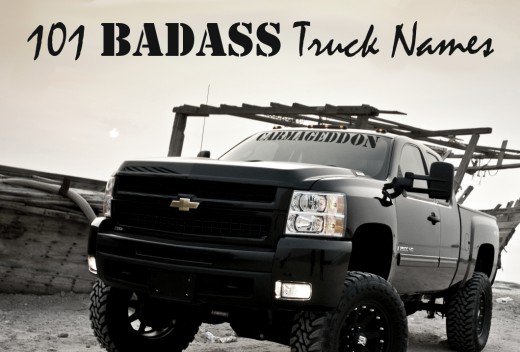
A selfish husband is concerned about looking tough in front of his friends.  So he might invest in lifting his truck and setting it on jumbo tires, or in a a barbed wire tattoo for his bicep.  No one will call him a wuss, even if takes him years to pay off the credit card interest to avoid that insult!

toughtruck

Is “Mitch McConnell” taken?

Similarly, Republicans want to look tough on everything: let’s find an excuse to go to war with Iraq.  Let’s have zero tolerance policies for immigrants and drugs.  Do these policies work?  Not really.  We have nothing (well, except ISIS and a few thousand casualties) to show for the over $2 trillion we spent in Iraq and not a whole lot more to show for a similar amount spent in Afghanistan.  The same can be said for the 40-year, $1 trillion War on Drugs.  (yep that’s a Fox News link…even they concede it while advocating to spend billions to keep fighting it)  No one will call that selfish husband or the United States a “wuss” – credit card debt be damned!

A selfish husband finds ways to justify extravagant purchases and foolhardy decisions as investments. “I need this expensive car so that I can project an image of success, you see, and then eventually that will help me get promoted and the car will pay for itself,” he says, just like the GOP always says “the upper class tax cuts will pay for themselves” (although neither the car nor the tax cuts ever do).

And a selfish husband also has to spend money to back up his big mouth.  He may have bet the boys that he can still dunk a basketball, or gone double-or-nothing on his losing football bet to make up his all his money at once…only to lose again.  Just like the Trump Administration is spending billions to bail out soybean farmers who are losing on the Trump Tariffs…and how the Trump Administration is adamant that Congress provide money for “The Wall” that he kept saying Mexico would pay for, because he can’t admit defeat on his signature campaign chant.

Vote for the Caring Wife

So would I love for the government to save a little money?  Sure.  But they won’t, so I have to pragmatically choose where I want that debt-fueled money to be spent.  With the “caring wife” Democrats, there’s stuff I might not buy for myself, but that should benefit my life: insurance, alternative energy, education subsidies, infrastructure.

On the other hand, the Republican wishlist just doesn’t have anything in it for me.  Sure, W sent me a check for $150 in 2001 (it could have been as high as $300, but alas I was in school for much of 2000) and the Trump tax cuts would have saved me a few dollars had he not also packaged them with “screw the blue states” amendments that offset the cut and most likely hurt my home value.  But those cuts added to the deficit, which Republicans also blew up with their “Tim the Tool Man Taylor” approach (with no Democratic Al Borland to check them) to spending: more power (weapons), more power (militarized police forces and mandatory minimum jail sentences), more power (as long as it’s fossil fuels).

The conventional wisdom is that Democrats spend money and that “women be shopping.”  But Republicans and tough guys spend more money…just on far less useful stuff.  So this November I’ll be voting blue…and not worrying when my wife says she’s on her way to Target.

Suppose you typically get home an hour or so before your spouse or roommate, and in that time you’ve seen at least 30 ants roaming around your kitchen.  That spouse/roommate comes in and you point that out: “hey in the last hour I’ve seen at least 30 ants – we should think about calling an exterminator.”  Which of the following would you say are appropriate responses from your spouse/roommate:

(A) Wow, but exterminators are expensive. Can we try giving the kitchen a thorough clean to get rid of crumbs and food residue, and maybe figure out where they’re coming from and those areas with some bug spray?

(B) You know, we live in a condo with shared walls, so before we do anything with an exterminator let’s talk to the neighbors.  Maybe they’ll share the cost with us, or maybe they’re doing something that’s just shifting the problem to us.

(C) I’m just not sure we can afford an exterminator right now with all the other projects we have going on.  Can we talk about how to best prioritize our budget the next few months?

(D) You didn’t see any ants.  There aren’t any ants.

(E) I forbid you to ever say the word “ant” in this house again.

If you’re a normal, reasonable person, A, B, and C sound fairly valid and D and E sound like grounds for divorce or moving out, right?

Here’s why I’m a Democrat: Democrats’ answers to real-world societal problems are generally in the A/B/C neighborhood, while Republicans frequently and vehemently choose D and E, over and over again.  For example:

  • GOP leaders in the federal government and in prominent state governments have banned the use of the terms “global warming” and “climate change.”
  • The GOP has famously prohibited the Center for Disease Control from even researching gun violence.
  • This past December, when every economic analysis suggested that their tax plan would increase the deficit and not stimulate the economy, Republican legislators pushed it through anyway, many of them even admitting they hadn’t read it.

And when they don’t go the ignore/deny/refuse-to-research route, the Republican response is often akin to:

(F) I’m going to spray the hell out of every surface in out kitchen with maximum-strength bug spray.  Wait, you say, but might there be potentially catastrophic results from coating everything we use to prepare and eat food with a layer of poison?  I don’t have time for your candy-pants worrying – these ants deserve to die and I’m going to take care of it myself.

Ants2

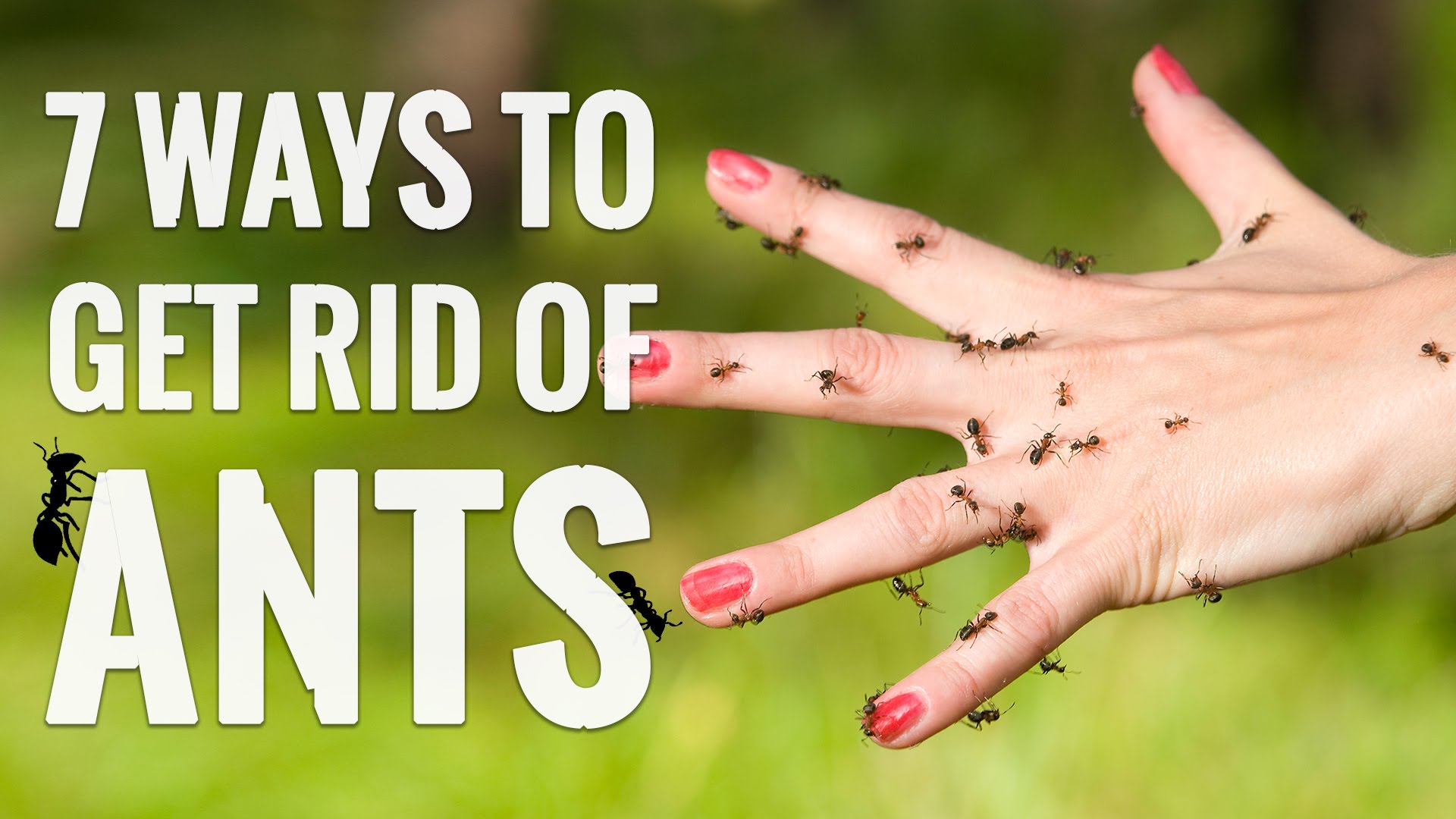
Hopefully at least one of these doesn’t involve a 15-year, several-trillion-dollar war…

Sound like hyperbole?  Well how about:

  • The Iraq war and the GOP’s move to rename “French Fries” to “Freedom Fries” when France – correctly, as history has shown – chose not to join in.
  • Separating asylum-seeking parents from their children (who were then caged), in a deliberately cruel fashion to deter future such asylum-seekers from approaching the border.

The Republican response to problems is, whenever possible, “who do we fight?” or “who do we put in jail?”  Drug addiction is a problem, but thanks to GOP policies we’ve been fighting a highly-militarized “war on drugs” for decades without making a dent in it.  The aforementioned Iraq war, you could argue, was a war in search of a reason (WMDs, the stated purpose, has been disproven over and over again). Same for immigration: yes, there are illegal immigrants and sure, there are gangs (including MS-13) that include illegal immigrants, but ICE raids on law-abiding doctors and parents, among others, are like using a grenade in your kitchen to get rid of a few ants.

The aggressive, militaristic, “zero tolerance” response may be the right one in some cases, but in many it’s overly-expensive, it adds more violence than it prevents, and it overlooks nuanced, innovative approaches that would be much more effective.  For example, forcing welfare recipients to work might seem to avoid a freeloader problem, but it’s also costly for the government and leaves welfare families with extra costs for childcare and transportation.  Militarizing the war on drugs has led to the massive costs of mass incarceration, plus all the negative effects that that mass incarceration has had on children growing up with parents in jail.

So what do I want?  I want grownup solutions to real problems.  “Lock them up” or “build a wall,” as we’ve learned, make for great bumper stickers and chants, but I believe that solving complex problems often involves solutions that are a little too complicated to make for a catchy chant or hashtag.  I want elected officials who embrace expertise, who seek out information on solutions that are working in other countries, who aren’t afraid to try “counterintuitive” policies if they’ve proven to work elsewhere.  For example, solving the opioid crisis might just involve making “supervised injection sites” available, where the addicted can use drugs in a supervised, safe environment that takes away the dangers of overdose and the criminal element of drug use.  Is it a little counterintuitive to say “solve the drug problem by giving people drugs?”  Sure, but if it saves lives, keeps communities safer and cleaner from the unsavory/criminal element of drugs, then why not give it a try?  “Just say no” and “lock them up” isn’t working (unless you own a privatized prison) so why not try unique solutions that have worked in other countries?

I want a government that solicits and trusts the opinions of scientists and other experts, that’s guided by analysis and results and not empty, slogan-friendly principles.  I want a government that looks at issues upon which we’re statistically among the worst in the world – healthcare costs, gun violence, mass incarceration – and looks for solutions as opposed to doubling-down on rhetoric.  And I want to identify actual problems to solve as opposed to creating issues out of nowhere that will somehow poll well with the base: illegal immigration just isn’t a source of rampant crime, but the deportation of longtime residents is something that breaks up families and divides communities.

I’m a Democrat because Democrats identify real problems that face everyday Americans and look for solutions – both those that fit on a bumper sticker and those that require an extensive white paper full of peer-reviewed studies – to address those problems.  And I’m a Democrat because currently they’re the only party that does that.  If there are ants or other pests that have infiltrated my house, there are a variety of solutions I should investigate before I arrive at an effective and cost-effective decision, and none of those solutions involve ignoring the situation while I yell about Hillary Clinton’s emails.

So you consider yourself a political moderate: there are some issues you’re liberal on, and others you’re conservative about.  So, as you might reasonably think is the right way to proceed heading into a congressional election, your plan is to assess the pros and cons of the Republican candidate, compare those with the pros and cons of the Democratic candidate, and choose the candidate you feel represents you and your community best.
Right?

Wrong.  In high school government class you learned the “theory” of how our political system works: each community is represented by one congressman (or woman, but your textbook probably said man), each congressman has one vote, and the majority wins.  But that’s not how it really works, particularly under a Republican-controlled House of Representatives.  Why is that?  Why is your vote for a moderate Republican candidate less likely to represent your interests than your vote for a moderate Democrat?

The Hastert Rule

HastertMug

Dennis Hastert’s mug shot

Named for former Republican Speaker of the House (plus convicted felon and admitted child molester, but that’s not necessarily important right now) Dennis Hastert, the Hastert Rule dictates that a Republican Speaker will only allow the House to vote on bills that have the support of a majority of Republicans congressmen.  So while a majority of congressional representatives overall might support a bill, if less than half of Republican reps support it it won’t even get a vote.

So let’s play this out.  There are 435 congressional seats in the U.S. House of Representatives.  Which means that you could have Republican control with 218 Republicans vs. 217 Democrats.  And let’s say there’s a bill on something that’s universally popular across America – for example, maybe 65% of Americans support something like a tax credit for medical expenses for families with terminally ill children.  A bill like that would probably have the support of all 217 Democrats, but say it only carries 108 Republicans.  That would mean that 325 of the 435 elected representatives in the House want to vote “yes” on that bill – nearly 75% of congress is in favor.  But by the Hastert Rule, a dutiful Republican Speaker would decline to let that bill see a vote, and it would just never happen.

Now while that’s the most extreme possible example in which 25.3% of Congress can control the fate of a bill, note also that the current split of Congress as I write this is 236 to 193 (this fluctuates with representatives leaving office, special elections taking place for their replacements, etc.), meaning that as of today, a Republican group of just 119 representatives, constituting just under 28% of Congress, has the ability to prevent a bill from reaching the floor.

So what does that mean for your vote?

Snip20180812_1

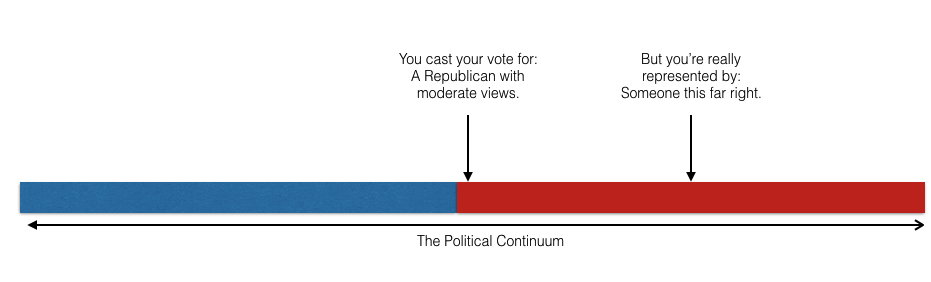
If you vote for a moderate Republican, you’re not really voting for that particular Republican.  You’re voting for the median Republican, who is probably a lot less moderate than the one you’re considering in your moderate district.  Your Republican representative’s moderate viewpoint will only be considered if more than half of all Republicans share that view – otherwise your representative won’t have an opportunity to vote on that issue.

(Political geek alert…feel free to read past this paragraph if you’re not a politics wonk.  What exacerbates this situation all the more is that 2018 is predicted to be a really close congressional election.  Meaning 1) If the GOP holds control of the house it won’t likely have more than 51 or 52% of all congressmen meaning that the Hastert standard of “more than half of Republicans” will represent a very small slice of the overall electorate, and 2) because Republicans (and Democrats, too, on the other side) have so many “safe seats” in homogenous or highly-gerrymandered districts, the median Republican in such a situation is likely to be very far to the right.  Those highly-partisan districts tend to pull candidates to the extremes in contested primary races that lead to safe general elections.  So consequently, if you’re in a moderate, competitive district that elects a moderate Republican in 2018, there’s a very high likelihood that your representative will be one of the 2-3 most moderate Republicans in a caucus whose median vote is further right than normal…and that median vote determines whether your representative even gets to vote for the issues and stances that won your vote.)

Now, you might be asking yourself: but wouldn’t the same thing be true on the other side if I voted for a moderate Democrat and they narrowly won control of the House?

And the answer is: no.  For one, the Democrats do not honor their own version of a Hastert Rule.  The most recent Democratic speaker, Nancy Pelosi, said during her tenure in response to exactly that kind of question “I’m the Speaker of the House…I have to take into consideration something broader than the majority of the majority in the Democratic Caucus.”  And secondly, Republicans control the Senate and the White House, so even if they do control the House their political power is held in check, and in order for Democratic representatives to show any accomplishments to their constituents, they’ll have to support legislation that can carry moderate Republican support in the Senate.

So the sum of all this is: if you have moderate views and are still undecided or leaning slightly to the Republican candidate in your district, please realize that – through the messy machinations of American politics – you sadly do not have the ability to vote for a moderate Republican.  Your vote for a moderate Republican is really a vote for the median Republican, whereas your vote for a moderate Democrat is much more likely to result in a candidate who by and large represents your interests.  The Hastert Rule ensures that this is true: moderate Republicans are only able to vote for bills that their more-conservative colleagues support.  So while, in theory, you might agree with your Republican candidate’s positions a little more than with your Democratic candidate’s, in practicality that Republican may not get many chances at all to further your interests.

So before you choose your candidate this November, consider the Hastert Rule and its implications.  Don’t just look at your Republican candidate, think about the median elected Republican in today’s Congress – probably someone from an hour outside Omaha or Raleigh – and how much that person represents your interests.  If you vote Republican in November, that’s likely who you’re really electing.

With so much hostility and division in American politics these days, I’m taken back to a day when – true story – a friend changed my mind about a political issue.  And I’m hopeful that at least some people will read this and see a path toward changing one of their friend’s minds or even their own mind.  Here’s my story:

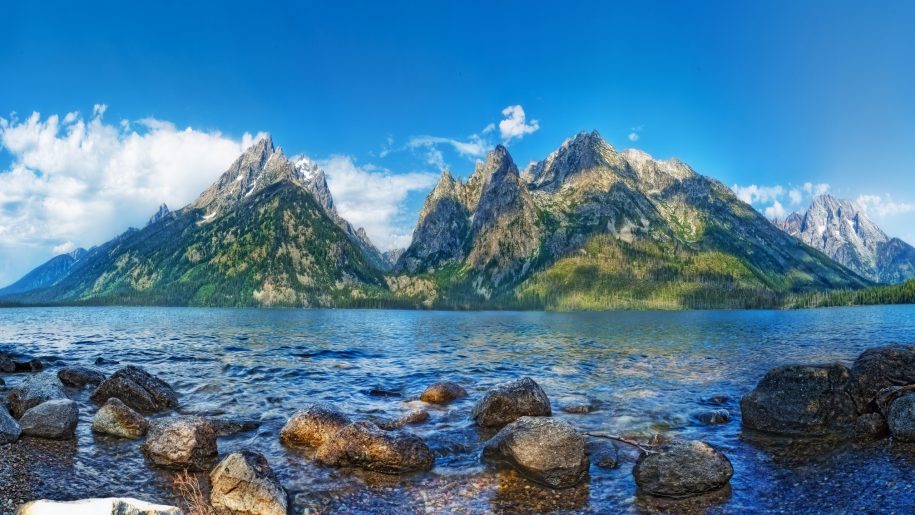
It was June of 2005 on a glorious summer day in Grand Tetons National Park.  I was on a cross-country-and-back road trip in the month before grad school started, and had picked up my college friend, Adam, in Idaho Falls the night before so that we could hit the Wyoming, Montana, and South Dakota national parks on my way back toward Michigan.

Jenny Lake

Jenny Lake: a good place to get some perspective.

At some point in the first hour or two of hiking the spectacular Jenny Lake trail, the subject of politics came up.  For background, Adam lived in (and had grown up near) New York City and was a relatively fast adopter of technology, ideas, etc.  I lived in, and had grown up in, Michigan, and am more of a slow adopter.  So while we had both voted for Kerry 7 months prior to this conversation, when the topic of gay marriage came up – perhaps because it had been a wedge issue that may have cost the Democrats a very winnable election – Adam was in favor of it, and I let him know that I was against it.

Now, it wasn’t at all the case that gay marriage was the only or even the main topic of our conversation over the next several hours of hiking.  But for a few minutes an hour, for a fair chunk of our food-and-water breaks, any time he formulated a new question to get my thoughts or I conjured up a new-and-seemingly-better reason for my stance – over the course of the day the topic kept coming up.  And to Adam’s credit he was never pushy or judgmental and he wasn’t always the one to return to the subject – he just asked questions that forced me to think about and try to defend my position.  And – spoiler alert – I didn’t do a very good job of it.

10am, hiking in shade maybe 15% of the way up the hill:

Adam: Wait are you against gay marriage in general, or do you just think that Democrats overplayed their hand?  You know Kerry wasn’t officially in favor of it.

Me: Well, both.  It definitely helped Bush that the GOP made it a wedge issue.  But I mean come on…gay marriage has been illegal forever.  Why change that now?  And why do liberals have to fight for it and risk losing better foreign policy, economic policy, stem cell research, and everything else?

Adam: Isn’t it just civil rights?  Why should it be illegal?

Me, forced to defend that position maybe for the first time ever: It’s just always been illegal.  Why change?  It’s not like anyone is saying that gay people can’t live together and love each other.  The word “marriage” just has specific meaning, a man and a woman.

Adam: Interracial marriage was illegal. Should that have stayed that way?

Me: No, man…that’s different.  <picks up the hiking pace, points out a cool view of the lake>

11am, closer to halfway up the hill, drinking water in the shade:

Me: I was thinking about what you said about interracial marriage, and of course that is and should be legal.  But gay marriage, man – why can’t it just be civil unions?  Marriage has that meaning – it’s more of a church word than a legal word.  It’s a man and a woman.

Adam: But calling it marriage doesn’t mean churches have to recognize it.  It’s separation of church and state, man – churches can do what they want, but if the government is involved everyone should be treated the same.  Right?

Me: Yeah, but it is the same – if you want to marry the opposite sex it’s called marriage, and if you want to marry the same it’s a civil union or whatever you want to call it.

Adam: So like Plessy vs. Ferguson, separate-but-equal?

Me: Come on, man – I’m not Jim Crow here.  It’s just…it’s different.  People can’t help being black, but choosing to marry someone…

Adam, interjecting: You know it’s not a choice, right? There’s scientific proof.

Me: But getting married is.

Adam: Shouldn’t everyone have access to the same choices under the law?

Me: I don’t know…this one’s just…different.  I see your point, but I just see it differently I guess.

12:30pm, almost to the top now:

Adam: So let me ask you this: even if like you say it’s different, why does it have to be illegal?  Why should we tell thousands or even millions of couples that their relationships aren’t as valid as other people’s?

Me: I don’t think we’re saying that necessarily.  We’re just saying it’s different.

Adam: So if a couple has been together for decades and one of them is in the hospital and visiting rules say immediate family only, you don’t think they should be able to visit just because they’re the same sex?

Me: I mean…they should.  They should just change the hospital rules.  Wouldn’t that fix it?

1:00pm, eating Clif bars at the top of the mountain, soaking in the view:

Adam: So other than “it’s different” what’s your real opposition?  Why does it even affect you?  Doesn’t it just affect the people who want to get married?

Me: It just…it just kind of cheapens the word marriage.  Marriage means something and has for centuries.

Adam: So drunken Vegas marriages, the huge divorce rate, the prenuptial agreement industry, reality shows where contestants meet each other and get married right away – those don’t cheapen the word marriage, but two men who love each other and want to make a commitment to each other getting married does?

Me: I mean…I guess not.

Adam: So what’s your opposition again?

2pm, picking up the pace after having stopped with other hikers to watch some bears near a stream.  (If somehow the bears get hostile, we don’t have to be faster than the bears, just faster than those families we’re leaving in our dust!)

Me, grasping at straws: You know, I guess if it’s not in a church then gay marriage doesn’t really threaten the traditional idea of marriage.  But even in the government sense…aren’t they just kind of cheating the system to reap the benefits?

Adam: What benefits?

Me: You know, like tax benefits.

Adam: What tax benefits?

Me: The benefits of filing jointly.  The whole point of government recognizing marriage is to encourage families, having children, paying into Social Security and all that.  But if gays are reaping those benefits, then we’re not subsidizing the right stuff – the point of subsidizing marriage is to encourage reproduction.

Adam: I don’t know, man – I don’t think you have much of an argument there. My dad owns an accounting firm…we can call him when we get back to the car and see what kinds of tax advantages gays are shooting for, or whether he’d advise two men to get married for the benefits.

Me, realizing that that call might not work in my favor: I mean whatever…I’m just saying.

By the time we reached the bottom of the mountain again, I had gone through essentially the same progression I had when I was a 10-year old desperately trying to justify my belief in Santa Claus. I wanted this position to be true, but there just wasn’t a good case for it other than “that’s the way it’s always been, and I like it that way” (sidenote: my “maybe there are regional Santa Clauses” was a decent attempt at justifying the logistics of the situation, but alas wasn’t to be…).  If on the way up the mountain I thought I had a good position and just needed to better defend it, by the way down I realized that:

  1. There just wasn’t a good reason to oppose gay marriage other than “it challenges the worldview I’ve developed about relationships since I was a toddler.”
  2. I was being kind of a jerk about it if I continued to hold that viewpoint.  Real people had a real, pressing interest in this issue, and I was holding on to my position solely out of convenience and reluctance to change.
  3. Even worse, I was making up “facts” to try to justify this position I had taken sort of on a whim and held to solely out of convenience.

But note – Adam never said any of those things.  He just asked enough questions and gave me enough space to realize it for myself. He didn’t confront me; he merely steered the conversation just enough that I had to confront myself.  And the epilogue here isn’t just that three years later I cast a vote in favor of same-sex marriage, but even broader than that that I learned a handful of lessons I think are really important.

Lessons Learned

  1. The woke need to be patient with the waking.  This whole conversation worked because it could take place in small chunks over a long day between good friends.  Had Adam called me names or belittled my opinions it would have made for a really rough trip and a much less receptive response from me.  But by steering me toward my own realizations, he made it so that I still enjoyed the heck out of a beautiful day in the mountains and I came to some profound conclusions.  Everyone should have the benefit of these kinds of long walks/hikes/bikes/whatever with a good friend who wants to open their mind.
  2. It’s not good enough to “have an opinion.”  It had better be an informed opinion.  What pains me the most as I look back on my opinion is that not only did I not have any good reasons for my position at the time, I hadn’t really done much thinking about it at all other than deciding “nah I don’t like it.”  Real people’s lives hang in the balance when we vote, and yet too many of us make knee-jerk decisions for no reason…or we make up our own false reasons.  There may well be good reasons to vote against certain progressive social justice reforms, but by and large the reasons you hear from people are as closed-minded and just wrong as mine were.  People shouldn’t have to suffer for your convenience or because you didn’t take the time to understand an issue before voting against it.
  3. Progressive causes are almost always right.  This one may be controversial, but much like St. Paul’s walk to Damascus opened his eyes, my walk to Jenny Lake opened mine.  Whichever oppressed, downtrodden, marginalized group is looking for a fairer shake – whether it’s gays seeking to get married or to adopt, trans people wanting to use the bathroom, blacks looking for better treatment at the hands of law enforcement, Syrian or Central American refugees seeking asylum – the arguments against them are almost always either emotional (“what am I supposed to tell my kids if their friend has two mommies?” / “do you know how hard it is to be a cop?”) or just plain made up (“these refugee children could be members of ISIS or MS-13!”).  If you genuinely consider the plight of those who would be affected and weigh that against reasoned, well-sourced models of the possible negative effects of such a policy, the negative effects seem to always be outliers whereas there are thousands, millions of people who are already being horrifically negatively affected by the current situation.  Sadly, most opponents of those positions don’t seem to even consider the facts – I know I didn’t in my steadfast opposition to gay marriage.

I write this as someone who wasn’t always “woke” – who had to wake up and realize how wrong I was and, embarrassingly for someone who considers himself smart and practical, how cavalierly I adopted and stuck by my position without being open to really thinking about it.  I urge fellow progressives to find opportunities like Adam did, to softly challenge and steer someone toward the light.  And I urge those opposed to that progress to just open your mind and consider other perspectives.  It’s not wrong to be a slow adopter, but if you know you’re a slow adopter like me it’s important to be conscious of that and to challenge your way of thinking, particularly when the consequences are largely immaterial to you but hugely important to someone else.

Not long ago, an old friend posted a meme on Facebook that essentially said “until Democrats stop driving cars and flying on airplanes, they can’t talk to me me about global warming.”   Which struck me as odd for a few reasons:

  1. It just seemed needlessly aggressive (this wasn’t days before an election or anything) and sort of stupidly misplaced (as a Democrat concerned about global warming, my position isn’t “everyone must halt all activities that consume energy,” but rather “the government should both invest in technologies and create policies that encourage cleaner, more-renewable energy”).
  2. This came *after* one of 2017’s major hurricanes – events that scientists believe are intensified and made more likely by warmer temperatures – forced him and his family to evacuate their home.  Global warming (if you choose to “believe in it”) had just been a threat to his family, his young children, his home…  Shouldn’t those events have at least (this isn’t a word but I’m going with it) “disemboldened” his anti-environmental advocacy?

Like anyone confronted with an aggressive social media post from the other side I muttered a curse word or two, thought about angrily replying and then remembered that no one ever wins an argument in the Facebook comments, thought for a split second about unfriending or blocking him, and then walked away and let it stay in my head all day.  And upon further reflection, what really stands out is this:

I just don’t understand the position of climate deniers at all.

I really just can’t fathom it – and in particular the passion and zeal with which they pursue it.  I guess I could see just never having learned about it, or having heard that it was a hoax and wanting to learn more about it (this reminds me of the time my adorable young sister held my hand while we were standing looking at the ocean and, knowing that you’re supposed to say deep things at times like that, asked “Brian, do you believe in crocodiles?” – she legitimately wasn’t sure whether they were real or a mystical creature, and having suspicions on either side wanted to know more.  Note – she did not say “until you and your loser teenage friends start wearing body armor next to large southern bodies of water you can shut right the fuck up about crocodiles.”  Alas, this was a few years before Fox News became mainstream…).

But seriously – I just don’t get the zeal behind seeing the majority of the global scientific community agree that “this could be a massive problem that threatens our very way of life,” hearing fellow countrymen and neighbors say “we really ought to do something about this to protect our cities, homes, and childrens’ futures,” and then smugly posting online “it was cold yesterday, losers – wipe off your frozen tears and shut the hell up about global warming.”

And I guess what it comes down to for me is that:

  1. I don’t understand the risk/reward on climate denial, and
  2. I actually don’t think there’s any risk in believing in climate change.

I’m genuinely curious – there are, of course, political debates that I get angry about, but on this one I really just don’t know.  Here’s what I don’t understand:

The Risk/Reward of Climate Denial

When I was in my 20s, I had a group of friends, a handful of which loved the game “Credit Card Roulette.”  Essentially the game goes this way – when the bill comes for a group dinner, everyone puts in a credit card, someone shuffles them up, and they ask the waitress to blindly pick one card.  That person pays the whole bill.  And I *hated* Credit Card Roulette.  Why?  The reward just didn’t seem to justify the risk – as a 24-year old making maybe $40,000, paying for a sensible $20-25 meal out once or twice a month wasn’t a big deal, but getting stuck with a $300 bill was a big deal – that might mean staying in a few Saturday nights, or saving less money for grad school.  Winning wouldn’t impact me much – I had already mentally committed to paying for dinner and had chosen moderately-priced items anyway – but losing would have a major downside.  Plus, as it always goes, the guys who loved Credit Card Roulette were the ones who would pay the $2 extra to upgrade their sides, would order drinks with premium spirits, etc.

Even if Climate Change were a small probability (science suggests that it’s not), denying climate change seems like a massive game of Credit Card Roulette with imbalanced stakes.  Because suppose climate change is real – if we don’t protect against it, people run the risk of losing their homes, we run the risk of majorly impacting the food supply, we could see major cities and highways completely flooded over by rising sea levels.  It’s like playing Credit Card Roulette with a thousand oil executives who are all drinking vintage bottles of liquor and wine, getting truffles with their surf and turf, ordering off a secret cigar menu…all while you enjoy your soup-and-sandwich combo off the value menu.  You could lose everything, and you have little to gain.

Because that’s the other side of the risk/reward of climate denial.  The risks seem huge – in reality, it’s like you have to put in every credit and debit card you’ve ever owned, and the thousand oil executives get to choose one and have it play against you.  And they tipped the waitress to feel for the heavy Amex Black and pick another one.  If you’re just playing the probabilities, the 95+% of scientists who agree that climate change is real suggest that, yep, you’re probably picking up the tab here.  But even if you want to flip the odds to maybe 10 or 20% like a classic game of Credit Card Roulette at a small table of friends, remember that they’re running up a massive, massive steaks, lobsters, and premium spirits tab, and you only stand to win…

What?

What do you stand to win?

What do you gain if climate change is a hoax?  

Again, I’m genuinely curious.  I guess it’s something – maybe lower gas prices?  Maybe your Exxon/Mobil stock grows a little faster, or better maintains its value?  Maybe you get to tell a picture of Al Gore to go fuck itself?

Now for an oil tycoon the gain is obvious: the more the world uses oil, the richer you get.  But for the average person?  I guess if you’re heavily invested in oil stocks you’d have something to gain (or to “not lose” from a progressive environmental agenda).  But if your investment portfolio is 100% in oil futures, then 1) your financial advisor is an idiot…diversify!, and 2) you have time to change that. (Again, diversify!)  As oil stocks swoon, stock prices should rise not only for alternative energies, but also for companies that use lots of energy as their energy costs also fall.  So I don’t totally buy that one for the average person.

Gas prices?  Yeah I could see a progressive agenda creating disincentives via gas taxes, and using those taxes to pay for solar and wind subsidies.  But 1) gas taxes are generally very unpopular so there’s certainly no guarantee of that.  And 2) policy should give incentives for electrics, hybrids, carpooling, public transportation.  So I doubt there’s a danger of your monthly transportation energy bill doubling or tripling.

And if anything, a plan to combat climate change is one that, in the long run, should lower energy prices.  That plan should subsidize wind, solar, geothermal, and hydroelectric energy, and create targets for utilities to raise the percentages of those renewable sources among their energy supply.  That plan should subsidize the installation of electric vehicle charging stations, and create targets for automakers to increase the average miles-per-gallon and percentage of electric vehicles among their fleets.  In the long run, a wider variety of mostly renewable energy sources, coupled with vehicles and machines that are designed to lose less energy, should lower all of our energy costs.

Or maybe you’re worried about how the government would pay for a progressive environmental agenda in general. As discussed above, maybe there are some gas taxes. And of course there’s cap-and-trade, and some industrial products may rise in price a bit if they’re more expensive to manufacture.  Is it income taxes you’re worried about?  Neither party likes to raise income taxes on the middle class.  Ultimately any environmental plan would probably be paid for by deficit spending – which is not ideal, but as evidenced by the recent deficit-increasing tax break for corporations and pass-throughs, it doesn’t seem like anyone in either party thinks the deficit is really a problem  Your taxes didn’t go up to support the wars in Iraq and Afghanistan, so it’s unlikely they’d go up here.

So what does the ordinary person really stand to gain from climate denial?  Some short-term savings at the pump?  The time saved from rebalancing your portfolio?  Because remember, you have to balance that gain against the potentially huge losses that would result if climate change were real – losses to your property and government expenses to rebuild from hurricanes, floods, wildfires, and everything else.  And don’t forget the smaller costs of increased insurance premiums, food prices, etc.

So, at least as I see it, the reward for denying climate change doesn’t seem all that great, which also means that the risk of believing in climate change is pretty small.  So let’s look at the flip side:

The rewards of believing in climate change (even if it turns out to be a hoax)

Let’s say that Hannity and Trump are right, and climate change is just a big hoax made up by China to…I guess slow down their current industrial revolution or something.  Whatever…climate change turns out not to be real.  And the U.S. has invested in alternative energies and instituted tough fuel economy standards and regulated industrial waste and all that stuff, like a bunch of suckers.  What do we have to show for ourselves?  Other than, of course:

  • Cleaner air and water (less smog, no oil pipelines rupturing into groundwater, etc.)
  • Fewer accidents like the Exxon Valdez or BP Gulf Coast spill
  • More competition in the energy sector among cleaner, more renewable sources, driving down energy prices
  • Less reliance on foreign oil, so less need to intervene in Middle Eastern civil wars and territorial disputes (ok I get why Dick Cheney denies climate change)
  • American companies leading the next generation of energy technologies
  • Byproducts of better energy storage systems (longer-lasting iPhone batteries, that kind of thing)

And byproducts of scientific research in general.  Think of all the technology you use today: how much of that came from our investment in NASA (satellite communications, GPS), or in military technology (the internet)?  Investment in new technology spurs on the economy and tends to raise our standard of living.  I honestly don’t understand: why wouldn’t you want the government to invest money – and I swear virtually none of it will be yours – in innovation that can reduce your cost of living, enhance your standard of life, create new industries for you or your children to eventually work in?

And let’s talk about terrorism for a second.  When an act of terror affects even a few Americans, we’re willing to spend millions to prevent the next one: we send American troops all over the world, we willingly give up certain civil liberties, we’ll do anything to protect against – fuck it, I’ll say the words that climate deniers so desperately want Democratic candidates to say – radical Islamic terrorism.  But 1) where do you think radical Islamic terrorists get their funding?  It’s largely oil money.  So why wouldn’t our “defend against terrorism at all costs” instincts lead us to invest in new technologies that will undercut oil?  And 2) climate change has the potential to kill or harm hundreds of thousands or millions of Americans at a time through violent storms, massive droughts and food shortages, and other cataclysmic events.  We overreact at any hint of something to fear, whether its SARS or bird flu or gang violence on the south side of Chicago; why doesn’t that kick in here?  How can you take this one threat, backed up by the vast, vast majority of the scientific community, and laugh it off as “screw you libs” or “if there’s global warming why did I have to wear a sweater yesterday?”

And I guess maybe it is a vast conspiracy of climate scientists, all hyping this threat so that they can continue to earn their research grant money to model the climate.  But why isn’t Zika a conspiracy of mosquito scientists?  Why isn’t the next big winter storm just a hoax perpetuated by Big Meteorology to sell ads on Headline News and the Weather Channel?

I just don’t understand climate denial, in particular when it comes so enthusiastically from people with the most to lose from being wrong.  What am I missing?

Diary of the Thomas Fire

Posted: December 18, 2017 in Uncategorized

Saturday, December 2: Prologue

6:30pm I drive the long way around the Main Street area to get home, having driven all afternoon back from a morning speaking engagement in San Francisco.  It’s arguably my favorite day of the year in the city of Ventura, California: the Winter Wine Walk is a big street festival during which they block off a 6-block area of Main Street and put a big concert stage at the main intersection in town, Main and California.  That intersection is one block downhill from City Hall, and about a 10-minute walk from our house.  When I arrive home we can hear the music from our open windows on a beautiful night: a mix of Christmas music, pop, and classic rock.  We walk down the hill to check out the scene, and downtown Ventura is hopping.  From 2-6pm most merchants had wine tastings, partnering with local wineries and breweries (you have to buy a wristband for $50 to partake; since I was traveling we weren’t able to).  The streets are filled with revelers, the city of Ventura kicking off the holiday season.

6:45  We arrive at California and Main.  We missed the exact beginning, but there’s fake snow blowing in the air.  For about an hour just after it gets dark the city blows snow around that intersection while the band plays.  A juggler on stilts dances to the music along with some bikini-clad Mrs. Clauses on pedestals.  Everyone is smiling, from face-painted children with candy canes to beleaguered wine walkers holding their umpteenth glass of the day.  Everyone has their phone out, spinning to take panoramic Instagrams or Snapchat stories so that friends around the world can enjoy this sand-and-snow scene.  Look uphill and City Hall is majestically lit on the hill looking down on the party.  Look downhill a few blocks and there’s the Pacific Ocean glistening in the moonlight.  This scene chokes me up every year: Ventura has everything, a vibrant, adorable downtown, the beach, the mountains, perfect weather, and even amidst that some snow for Christmas.  I soak in the scene: I’m so lucky to live here.

Monday, December 4: The Fire

8:11pm  My Aunt Joan texts from Connecticut.  “Just heard about the large fire in Ventura County. Praying you are safe and far from the flames. 🙏🏻”

We just sat down to dinner and Lindsey hates when I touch my phone during dinner.  But it’s Aunt Joan and it’s after 11pm her time so I want to at least respond.  I Google the fire – it’s in Santa Paula, a city about 15 miles away.  Most of my life in Southern California revolves around the coast: probably 80% of my commute is on roads that directly hug the beach.  I live within a mile of the ocean, and the two offices I report to are at least as close.  So while Santa Paula is 15 miles away, in my mind it might as well be Arizona – I just don’t know anything about it.  I respond “Yikes…looks like it’s a couple towns away but I’m sure we’ll be smelling smoke soon.”  We get back to eating dinner and I make a mental note to check on the fire when we’re done.  The wheels start turning: but wait…if it’s already news that people are getting in Connecticut, it’s probably a bigger deal than I’m making it.  I’d better check on this soon…I’ll eat fast and won’t go for seconds.

8:22pm  My friend Laura texts.  She lives maybe an hour away in the San Fernando Valley closer to LA.  “Wow.. I’m just hearing about the fire up by you guys! This wind sure isn’t helping either…  Let us know if you need a place to go!”  We’re just about done with dinner.  I’ll turn on the news and start looking on Twitter.  As they say, where there’s smoke there’s fire, and two texts over 11 minutes means there’s smoke.

8:25pm  I get up to rinse the dishes (I’m a great rinser!) and put them in the dishwasher.  I’ll run upstairs to change out of work clothes and then start looking into the fire.  We keep the windows upstairs open pretty much year round.  As I get halfway up the stairs the smell of smoke hits me pretty hard.  I close a window and while I have my drawers open to change clothes I grab a few things and throw them in a duffle bag…just in case.

8:30pm  Downstairs I grab my laptop and flip the channel from Monday Night Football to the K-CAL 9 news.  I tell Lindsey “it’s really smoky upstairs…we should keep an eye on this.”  She’s doing some Christmas shopping online and crafting an email to a friend of ours – the woman who owns the safari company we booked our honeymoon with – just to inquire about what it might entail to get a safari travel agent job someday.  She’s reading off proposed sentences to me and asking questions about whether my siblings would like this candle or that book.  I’m half-listening, half-watching TV, half-skimming Twitter’s “Thomas Fire” hashtag (and 100% bad at both multitasking and math).

8:45pm  The news suggests that Ventura County residents sign up for “reverse 911” service, where the county will call your phone with evacuation and emergency alerts.  I sign up for both me and Lindsey.

8:50pm  It sounds like this thing is moving pretty fast.  I tell Lindsey I’m going to go pack for real.  Upstairs I start with clothes but then realize that if we evacuate we may never get back.  I’m close to the “if you only have X minutes to take things out of the house for a fire, what do you take?” drill.  What do you take?  I grab the championship ring I “won” as a salesperson with the 2004 Detroit Pistons…that’s something I couldn’t replace and that I want to pass on to my kids someday.  I dig in a drawer for a few favorite t-shirts – the “Woo, Pig, Sooey” Arkansas shirt that I picked up 10 years ago at a family reunion in Hot Springs when the airline lost my luggage has been a family favorite for years.  I laugh a little – my brother, my sister, and a few cousins will think it’s hysterical that I made a special point to save this t-shirt from a fire.  But otherwise I’m a little paralyzed. What’s really that important to pack right now?  Do I go for high dollar value?  High sentimental value?  Practical value?  I’m not panicked yet and we don’t have any immediate need to move, so I guess I’ll think about it.

9:00pm  It’s funny how you can live in a neighborhood and not know very much about areas within 10 miles. I’m now addicted to the Twitter accounts following the police and fire scanners and posting updates.  And as they call out roads and neighborhoods that are within 10 miles of where I live, I have to Google just about all of them.  They’re issuing mandatory evacuations every few minutes now it seems, but nothing I recognize or nothing that seems all that close to us.  Reports now say that “Ventura may be affected by morning” which strikes my senses of both calm and fear – I guess we have some time, but how in the world could I just go to sleep tonight knowing that there’s a good chance a fire is on its way with us in its direct path?

9:08pm  The @CAFireScanner twitter account posts that the fire is marching west and that fire officials don’t expect to be able to stop it before it reaches eastern Ventura.  We live on the western edge of Ventura but still…that’s a little close for comfort.  The post references “Sexton Canyon Road” as the first place that the fire department thinks it might be able to stop the fire’s spread westward. I Google it…it’s not that far, maybe 6 miles?  And if that’s the FIRST place they THINK they MIGHT be able to stop it, that’s not good news.  This thing is moving fast. I need to convince Lindsey to start packing.  At this point I’m mentally committed to evacuation…it’s probably a matter of “when” and not “if.”

9:14pm Lindsey has been working on that letter for a while now.  She sends it to her sister in Seattle for a quick proofread.  She’s ready to turn her attention to the fire now.  I tell her what I’ve been reading and how far ahead Twitter seems to be of the TV news.

9:15pm Lindsey texts her sister that we’re probably going to evacuate.  She starts packing a bag.

9:30pm We’re in our bedroom putting clothes and personal items into bags.  The view from the bedroom (and from the family room below it) is what sold us on this house – you can see the ocean, the Channel Islands, the mountains, and downtown Ventura.  Sunrise is my favorite – we face south to the ocean so the sunlight starts to silhouette the mountains, then the twinkles start on the water, and for a few minutes there’s this heavenly glow as the city and the islands  “wake up.”  Some sunsets are even more beautiful, with the entire seascape lit up with that perfect hue of pink, the mountains and islands so clear and vivid.  Tonight you can barely see to Main Street, three blocks downhill – we’re clouded in a wall of smoke.  I stare for a minute or two: is this the last view I’ll ever see from this window?  I want one more sunrise, one more glorious sunset, one more street festival on Main Street with live music and a vibrant downtown piping through the window, accompanied by a cool ocean breeze. If this is the last view, did I fully appreciate the beautiful ones as much as I could? I think of the sunsets I missed watching football or staring into my phone, the Saturday morning sunrises I slept through.  I feel guilty, and sad.  Please let me have one more.

9:45pm  I’m putting things into the car now.  My duffle bag of clothes and championship ring is in there.  I put my work laptop bag in there…if I lose the house, I’d better keep this job!  I grab a handful of collared shirts on hangers and lay those in the backseat.  Beneath the hangers in the closet is a pair of dress shoes…I scoop those and throw them at the feet of the passenger seat.  It’s real now – packing bags is one thing, but putting them in the car feels like a big step.  Lindsey texts our next-door neighbor to ask if they’re packing.  They’re not as worried: the official word is that the fire wouldn’t get to us until morning, so they’re planning to sleep in their clothes just in case they get the emergency alert.  I feel a little silly: am I panicking out of nothing?  The smell of smoke is thick in the garage…I don’t think I’m overreacting.  Better safe than sorry.  Lindsey wonders: do we really need to load up the cars if the neighbors aren’t?  I think about it.  “The happiest part of my morning tomorrow will be unpacking this car” because we didn’t have to evacuate, I say.  Let’s keep packing, just in case.

10:01pm  The power goes out.  Okay this is real now.  Like I said, we can see the city from our windows.  Everything is black. It’s not just us.  We grab flashlights – Lindsey is such a great planner she knows exactly where they are!  We don’t have internet or TV anymore so it’s 4G on our phones for news.  I’m glad I used the car charger on the way home from work…I’m at 80-some percent battery.

10:15pm  Twitter says the fire has spread into Ventura.  In less than 2 hours since we learned about it, it’s made up more than half the distance from where it started to where we live.  It’s time to get serious: I grab the two suits I have in my closet, including my wedding suit, and throw them in the car.  I grab Lindsey’s wedding dress out of the guest room closet and put that in, too.  My laptop is useless right now without power…that goes underneath the drivers seat.  I realize that our garage door is electric.  My wife is a little handier than I am..I call her out to the garage and we disconnect the door from the motor so that we can manually roll up the door and get our cars out.  I keep asking myself – somewhat morbidly I guess – what would be the one regret I’d have as the flames consumed me: I should have gotten the cars out sooner?  I should have evacuated before everyone else did and traffic got crazy?  I went back into the house to grab just one more thing? What would that thing be? Let’s get it now.  We may still have a couple hours, but however much time we have is the time we have to eliminate regrets.

10:30 We sit down for a few minutes.  It’s weird – we vacillate between frenzied packing and just kind of numb paralysis.  Is this real?  Are we overreacting?  Are we reacting fast enough?   Our new king mattress is on the floor – we got spoiled with big king mattresses in our wedding and honeymoon hotels so we just used some wedding money to buy one.  The bed frame is being delivered tomorrow.  We sit there and look out the window from the ground, then lay down for a minute with Lindsey’s head on my chest.  I can’t remember if we talked about anything or just lay there.  It’s dark and we’re a little numb.  It’s a really strange feeling: Lindsey is still hopeful that the fire will pass us.  I’m committed to evacuating, wondering when we’ll have to leave.  Because of that, I want to leave soon…why wait here and regret not getting ahead of it?  She’s conscientious: she’s “on call” at work until 7am and wants to make sure she doesn’t abandon her responsibility for nothing.  I tell her we need to get up and get moving.

10:45 The fire has doubled from 5,000 acres to 10,000 acres in the last hour, and the police/fire scanners now predict it will reach Ventura by 1am.  You always hear about that “if you could only carry a few things out of the house in a fire, what would you take?” thought exercise.  This is it.  What do I want?  So many possessions seem so trite and inconsequential right now.  I don’t have photo albums – everything is digital these days so I have my laptop and my phone.  I run to the “exercise room” and grab my Ironman finishers hats, my Boston Marathon jacket – I dreamed of these things over so many hours of training.  I grab the watch that my company gave me for my fifth anniversary there: the same kind that Barack Obama wears.  Lindsey and I grab our framed wedding invitation and the painting of the elephant that we bought on our honeymoon in Africa.  She’s getting practical now, grabbing the air mattress and some blankets. I’m a little paralyzed – what’s irreplaceable?  What will I regret not grabbing?  I look at a few things: books I love, autographs, my triathlon bike, my cycling shoes. I should probably just be grabbing anything that I even consider worthy of thinking about, but some seem too big and others just don’t seem important enough.  I’m probably missing something obvious.  Lindsey yells that she has the passports and our box of mortgage paperwork.  I’m glad I married her…I don’t know that I would have thought of those.

11:05 Our neighbor texts that the fire has hit Shell Road, which is 5 miles north of us.  The fire started 15 miles east of us.  It has already covered the entire horizontal distance.  Now it’s just a matter of whether it comes this far south.  About a mile south of us is the evacuation center, the place they’re sending everyone to be safe.  But that’s a big mile: that’s all the way down on the beach, and we’re just far enough up this hill that there’s a tree-and-dry-grass-filled park right across the street from us.  That one mile to the beach isn’t very flammable, but most of those five miles between us and the fire is.  I can’t help but think that the probability is high that the fire reaches us; Lindsey doesn’t want to leave…she can see the evacuation center from here, so how can we not be safe where we are?  Our neighbor says not to worry too much: we’ll be notified when the evacuation is mandatory.  Lindsey likes that sentiment; I lobby to leave right now.

11:26 Our neighbor texts again: there’s burning by the cross.  Serra Cross is the most notable landmark in Grant Park, the park right across the street from us.  Straight uphill it’s maybe 100 yards away, but it’s steep so the walk to get there is three steep switchbacks, probably a 15-minute walk up.  The fire doesn’t have to take the switchback route, though: I run downstairs to roll up the garage door.

The hill is orange at the top.  It’s one thing to hear that there’s a fire there, but another to see it.  Ashes are falling from the sky like snow.  It’s almost pretty if it weren’t so terrifying.  I yell inside: Lindsey we have to go NOW!  She has put a few things by the door; I grab them and throw them in my car.  Lindsey…NOW!  She’s crying – she’s upstairs now for some reason and says she’s coming.  It sounds like she’s sorry that she’s letting me down by running late, like I’m yelling at her for falling behind an arbitrary schedule.  It’s not that!  I’ve just looked in the eye of the danger…it’s not me, Lindsey, it’s the fire!   She comes down, hysterical.  While she’s coming down the stairs I grab two cases of water off a garage shelf and throw them in her car.  The charging cord for my car is next to them – I throw that in her car too.  I run back inside to see what she needs me to carry.  There are candles burning – we lit them when the power went out.  If by some miracle the flames outside don’t burn this place down, I don’t want to regret letting these tiny candle flames somehow make it an inside job.  I blow out the candles, almost laughing at the irony of protecting the house from these two tiny flames while this massive fire rages a hundred yards away.

11:29  She’s grabbing her purse and putting on shoes, and I realize I need to have a plan.  “Leave” isn’t enough – what if we get separated?  My phone service is already intermittent tonight and the power outages can’t help the cell towers.  We’re taking both cars…what do I tell her to do?

“Lindsey, drive north on the 101 and meet me at the chapel where we got married,” I tell her.  I needed to pick a direction, either north or south on the freeway, and for our stretch of US-101 the “north” route really heads northwest while the “south” runs southeast.  North goes away from the fire.  And we just got married two months ago in Santa Barbara, 30 miles north…we have landmarks to meet at.  I watch her back out of the garage, and I quickly follow.  I jump out to pull down the garage door behind me (how terrible would it be for the house to survive the fire, then get robbed before we can get back?), then point the car directly at the flames before I can turn left out of the driveway to head down the hill.

11:32  It’s eerie…the smoke looks like fog and the power outage has the town otherwise completely dark.  And oh right: these blocks we’re driving through normally have traffic lights, but those are out with the power.  Lindsey is ahead of me: I hope she recognizes to stop at these corners.

11:34  I’m on the highway with Lindsey ahead of me.  I’ve been mentally prepared to evacuate for well over an hour, but this came suddenly to her.  I want to talk to her, to make sure she’s okay, that she’s comfortable driving.  I try to call her through the car, but the cell service won’t call out.  The sound system reverts back to the radio – I hadn’t even noticed that the radio had been on when I got in the car but the dropped call has now alerted me.  It’s Sirius radio’s 90s on 9 station playing Motownphilly by Boyz II Men.  This is way too peppy a soundtrack for the moment.  I consider finding something more…appropriate?  I realize that’s insane.  I turn the radio off.

11:35 I call again.  The call won’t go out.

11:36 I call again.  She answers but the call drops within five seconds.

11:37  I call again.  She answers, crying.  She can’t talk: she’s trying to call her office to tell them that she can’t be on call the rest of the night because of the evacuation.  She’s so conscientious.  I admire that for a second but worry about her multitasking in all this chaos.

11:45  There’s no fire in the rearview anymore, just darkness all around.  I’m thinking about what’s next: assuming, as appears to be inevitable right now, that the house burns down, what do I do?  I think about the homeowners insurance, how when I bought the house Farmers Insurance required a supplemental fire plan through the state of California, but then through neighbors I found a Costco/Ameriprise plan that didn’t require that.  But does that mean it’s shoddy coverage?  Will I be protected?  And if that covers the cost of rebuilding, what do I do in the time it takes to rebuild?  Do we stay in a cheap studio apartment for a year or two while we wait?  Do I move somewhere else where the cost of living is way cheaper?  Can I stomach paying a monthly mortgage – on a place I can’t live for the foreseeable future – along with rent for a place I don’t like nearly as much?  Do I still pay insurance if there’s no home there to insure, or property taxes if there’s not really any property?

11:47  I can still taste tonight’s dinner just a little bit.  Chicken cordon bleu. Lindsey made a double batch so that I could bring leftovers to work for lunch tomorrow. This fire has ruined that for me.  Dinner was so good tonight.

11:50  Halfway to Santa Barbara. It hits me that it’s 3am where my parents live.  They don’t know that this is happening: they may wake up and hear the news, but right now they’re blissfully asleep while my life is burning down.  I’m a fully-fledged adult but I feel like I’m five – I want this to be a bad dream, for my parents to tell me that it’s all going to be alright.  But I don’t want to wake them up and worry them.  In a few minutes I can sit down with Lindsey and we can figure out the next few hours.

11:55  It dawns on me that I spent a good portion of my free time the last 10 days writing thank-you notes for wedding gifts.  Lindsey was going to drop them all at the post office today.  But if she didn’t?  And they all burn up in the fire?  Will I have to write them again?!  Even if the gifts were all lost in the fire, too?  (Update: Lindsey did put the thank-yous in the mail *and* grabbed our box of gift cards before we left so that they wouldn’t be lost in the fire.  Man she’s good.)

12:05  We’re off the highway in Santa Barbara, where there’s no power here either.  The streets are pitch black, the traffic lights out.  I slow at intersections looking for either darkened traffic lights or someone else’s headlights.  We pull our cars over in front of the Presidio Chapel.  Just nine weeks ago we stood here on a perfectly beautiful day taking wedding pictures with so many people we love.  Tonight it’s just us, it’s absurdly dark, and it’s cold.  Where I stop behind Lindsey I’m only halfway into a legal parking spot.  I’ll deal with that later: I want to get out of the car and hug her.

12:08  We sit on a ledge between the sidewalk and the chapel, huddling to keep warm and to lean on each other.  Her crying has turned to a light sob, but then she breaks down again.  “I didn’t give you a chance to give you your Christmas presents” she stutters through deep breaths.  She asks if I want to know what they are, or maybe more aptly what they were.  I tell her no, that I want to wait to see if they’re still safe in the house so that they can still be a surprise.

12:09  She stands up and says something about “going back for vows.”  I feel like an idiot: in my nightstand I keep the little book with the wedding vows she wrote to me, and while I was numbly looking on shelves and tables for sentimental items, I never thought to go get those.  She runs over to her car and pulls the book out of the center console: while I was yelling at her that she had to leave the house, she had run upstairs to go get the vows.  That’s what she went back for.  I’m choked up.

12:15  It’s cold and we need to find a place to stay.  The other thing I liked about driving north to Santa Barbara is that we know some hotels here from our wedding, and if they’re already full of evacuees maybe we can at least play the “remember us newlyweds?” card to let us leave a car there so that we can go search together.  My parents had found an off-the-beaten-path (well, at least not right downtown and not obviously off the highway) motel that was a great place and a great deal, and plenty of relatives stayed there at the Lemon Tree Inn.  We make plans to drive there – only a couple miles away – and get to work on lodging.  In the dark we turn off a block or two too early and get turned around in the dark.  It’s not our night.

12:32  We arrive at the Lemon Tree and the parking lot is fairly full.  I pull into a space and jump out to help Lindsey find one, too.  I grab the duffle bag that somewhere contains my wallet; Lindsey grabs a bag or two and we head in.  The power is out, so a manager greets us with a flashlight and pushes open the door.  They’re technically full, he says, but there may be a room or two still available online at booking.com.  My phone doesn’t have service.  Lindsey is down to one bar and it’s loading really slowly.  I almost ask whether we can use the hotel internet to look…but of course the power is out.  Without access to his computer, the night manager isn’t sure how to tell whether a room is available through the web service, so to his knowledge they’re sold out.  I thank him and ask him if I can at least leave my car while we search; I’ll come back for it in the morning.  He agrees and we leave to grab some of my things and transfer them to Lindsey’s car.

12:35  The manager runs out.  “There’s one reservation that hasn’t shown up, so let’s give you that room,” he says.  I ask if he’s sure.  He replies “if they show up, I’ll deal with it then.  You guys have had a rough enough night already; let’s get you a good night’s sleep.”  He writes a “contract” on a blank sheet of paper and I sign under my credit card number.   With the power out I joke “before I sign I should ask, do your rooms have HBO?”  He walks us to our room with his flashlight.  At least we have a place to stay tonight.

12:50  The flashlight app on my phone is reflecting in the mirror so that I can brush my teeth in this dark hotel room.  In the reflection I see our duffle bags and backpacks in the shadows near the door.  This is how we live now until further notice.  I rinse the toothbrush and switch off my phone, then walk back to the bed in the dark.

1:09  Lindsey’s phone chimes.  Her phone settings don’t display the full text on the screen, just the name of who sent the text.  It’s our next-door neighbor, Lonna.  Before she logs in to her phone we pause: this is news, but are we ready for it?  Lonna says “I don’t think we have homes anymore. We’ve been sitting in our car at the fairgrounds watching our hillside burn.”

1:11  It’s real now.  We probably knew that this would be the result as we drove away, but with an eyewitness account I guess that’s it.  We’re both a little too tired to outright cry, but tears well up as we hold each other.  Tomorrow we can start figuring out what to do next.  What does insurance cover?  Where do we live while we wait that out? How long will it take to rebuild?  Can we even afford to rebuild?  Those questions occupy the outer regions of my brain, but really all I can focus on right now is that empty feeling of finality.  Wow.  It’s gone.

1:18 It’s “what if?” time.  I think back to when we toured – and loved – our house.  What if I had put in a lowball offer and been outbid? What if hadn’t been playing around on Redfin during long indoor bike workouts, and had never discovered our house?  What if I had listened to my cold feet while we were in escrow?  All these little decisions…how did they lead me to here, and how could things have been different?

1:22  It’s self-pity time.  I think of all the hard work that led to being able to afford that house – tutoring after work, teaching classes on weekends, long commutes, stressful workdays, responding to emails on weekends, holidays, vacations.  Being diligent about saving money.  Years of being hardworking, responsible, frugal…and it can all go away because someone 20 miles away flicked a cigarette butt into dry grass on a windy day?

1:25  It’s self-doubt time.  I could have stayed in a smaller apartment.  I didn’t need this house.  And yeah I think I’m responsible and hardworking but buying a house up on a hill with a view of the ocean…that’s greed, that’s indulgence, that’s wanting to have something that other people would envy.  I didn’t need that – through my own devices I put myself directly in the path of the fire.  I don’t have anyone to blame but myself.  I flew too close to the sun and literally got burned, so maybe I deserve this.

1:38  Lindsey’s phone chimes again.  It’s Lonna again.  We can’t believe it.  “Your house is fine.”  We text back.  How do you know?  She responds “we’re home.”

1:40  Seriously?  All within a half hour we go from knowing our house is gone to knowing that it’s safe, and safe enough that our neighbors – we share a wall – feel comfortable staying the night there?  Once again I’m numb.  I want to be thrilled, relieved, grateful, overjoyed.  But I just can’t believe it.

1:48  Lindsey and I both struggle with belief in God.  I wish I did – life was so much easier when I could just assume that a magical man in the sky had everything under control – but as I’ve grown up I’ve become skeptical.  Quick tangent that I think I’ve blogged about elsewhere on here, the seeds of those doubts started with the “Doubting Thomas” story in the Bible, where Thomas is the only apostle who doesn’t get to see the resurrected Jesus and is (rightfully, I’d say) in disbelief when the others tell him.  The lesson from that passage is “just believe, just have faith” with Thomas painted as “the bad guy” for not accepting that at face value, the last line “blessed are those who have seen and believe, but even more blessed are those who have not seen and yet still believe.”  And even as a 10-year old altar boy I always felt that that was the kind of thing a con artist would force on you.  It was the Wizard of Oz saying “pay no attention to the man behind the curtain” or Donald Trump saying “believe me, believe me” after every asinine statement.  So at the same time I’m living Thomas’s life for a moment – I keep asking Lindsey to ask Lonna more questions…I cannot believe that our house is still standing – and, yes, thanking God.  Maybe it’s just a habit from my childhood but when we were fleeing I was praying, God save our house, and now that it’s been saved I’m praying, thanking God.  One more tangent – I think about two men I admire a ton, Cat Stevens and my uncle.  Both, in times of crisis, prayed with the bargain “God if you save me and my family, I will dedicate my life to serving you.”  I may be a terrible person for saying this, but I’m glad I stopped short of that…I get to keep my house *and* watch football on Sunday mornings instead of going to a church that I can’t entirely believe in.  The art of the deal…

1:55  Okay I’m thrilled now.  Lindsey is crying tears of joy.  We’re hugging each other tightly – we have our home, and we got through this together.  It’s only been a few hours but it feels like it’s been a lifetime.  We got each other to safety, we helped each other through a hard time – our relationship is strong and we can handle crisis together.  That’s a win!  And after all that everything is just okay…how did we get so lucky?

2:06  Lindsey and I are still beside ourselves with relief and joy.  What a night it’s been, too emotional to just go to sleep.  I realize again that none of my immediate family back in the Midwest has any idea that any of this has gone on.  My brother wakes up before 5am Eastern – he works in a school and works out in the school gym before classes start – so he’s almost certainly up by now.  And he loves a good story.  I call him.

2:07  Essentially I’m just telling him everything you’ve just read.  His disbelief wears off quickly – those who know us know that when we get together it’s only a matter of time before the jokes and hip-hop references are flying – and we shift to celebration mode.  I quote Jay-Z “If you escaped what I escaped, you’d be in Paris getting effed up too!”  Sean has already made plans to come visit in February, so I close the call by triumphantly saying “the trip to Ventura is still on.  You can stay at MY HOUSE!”

2:20  Remember Leon Lett?  In a Super Bowl in the 1990s, Lett was a defensive lineman for the Dallas Cowboys, who were blowing out the Buffalo Bills.  Late in the game he scooped up a fumble (or maybe it was an interception) and ran over 50 yards untouched toward the end zone – a 300+ pound defensive lineman in full sprint to score an improbable Super Bowl touchdown that would put the exclamation point on a championship.  But famously he started celebrating inside the 10 yard line, holding the ball down low while strutting toward the end zone, and a speedy Bills receiver chased him down and knocked the ball out of his hand before he could score.  My brother and I love that play…over 20 years later Leon Lett is a common punchline when we get together.  And I bring this up because:

2:21  Lonna texts again.  “We’re being evacuated again for another fire by city hall.”  City hall is about a quarter mile away.  Did I just Leon Lett my own house?

2:25  Lindsey and I are exhausted.  The winds are supposed to last all week and the fire is spreading.  This won’t just be a long night, but probably a long week.  I drift off to sleep, mad at myself for celebrating too soon but optimistic, too, because I know that we survived one close call so I know it’s possible we survive another.  An hour ago I was sure my house was gone.  Now there’s a 50%? 75%? chance it’s still there…I can sleep way easier now than before.

Tuesday, December 5: The Aftermath

7:00am  Lindsey’s phone chimes.  After a night of tossing and turning she’s finally asleep, but I’m up and desperate for news.  It’s Lonna – all’s safe in the morning although there are still fires burning around town.  They’re back at home, with no fires in the immediate area.

8:00 I check the Nextdoor neighborhood social media app.  There’s a message about a fire at “the apartment building on Cedar.”  If it’s the building I’m thinking about, it’s right at the first intersection we come to every time we leave the house.  I keep refreshing for updates: an hour later I’ll hear that someone has driven by and everything looks okay.

8:45 I’m watching the local news, which is wall to wall coverage of the fire.  The weather girl is talking about the strength and direction of the winds, noting that the dry, windy conditions will last at least through Friday, a full four more days.  I look at the map on the screen: we’re at the mercy of the winds for the rest of the week.  It’s a strange feeling rooting for the winds to blow in a different direction.  With all reports accepting that 1) the fire won’t be contained anytime soon and 2) it’s going to be windy all week, the only thing to really hope for is that the winds push the flames toward somewhere else.  But every “somewhere else” puts someone else’s house in the path of the fire.  Why should they have to suffer just so that I don’t have to?  I realize that my rooting doesn’t really impact the winds at all, but all the same I feel conflicted.  I can’t help but want the winds to shift, but I can’t shake the guilt that my hopes are probably working against someone else.

11:00  After grabbing some breakfast, Lindsey and I are on our way to check out our house.  Technically we’re still under mandatory evacuation orders – really the whole city is – but we’ve heard that people are at least going to check on their homes.  It’s a quiet morning as we drive along the coast: you wouldn’t know that such a terrifying fire – one that will soon affect every inch of the coastline we’re driving – is burning out of control just a few miles away.  As we exit the highway we look at the hill we live on: it’s charred black, virtually the whole thing having been scorched over the past 12 hours.

11:05  We drive around some barriers to get on our street.  I’m holding my breath: I know that the house is still there – we could see it from down below – but I’m still not sure what I’ll see.  As we pull up our row of townhouses looks exactly like it has for the time we’ve lived here…but the hill behind us is a mess.  I count three different plumes of smoke coming off the hill within 50 yards of our street, and all but the first maybe 30 feet of the hill is either charred black or covered in ash.

11:10  We walk into the house.  It smells like a Marlboro factory and there’s ash all over the floor in the main room.  But otherwise everything is perfectly fine.  I’m glad I blew out those candles!  Although maybe not: would the house smell more like Bath and Body Works and less like smoke had I kept them going?  We do a bit of a trade: some of the essential items we brought – blankets, tissues, toilet paper – can go back in the house now that we have a hotel room secured.  But I run to my nightstand to grab my little Ziplock bag of greeting cards: mostly from Lindsey, but a few from my parents and my grandmother – it’s weird but just in case something ever happens I want to be able to read their handwriting…for the same reason I keep a saved voicemail from each of my immediate family members so that I could always hear their voice again, too – and a series of notes I’ve exchanged with my sister (whenever we’re in the same building the night before a big life event for one of us – moving a way to college, a first marathon, a wedding – we slip a note under the door of the one who has the big event. Meghan started that the night before I moved to college).  I have some gift cards and a little spare cash there, too – it could be days before the threat of random fire is gone, so with some daylight and perspective I grab the sentimental and the irreplaceable.

11:25  We’re talking to some neighbors who stayed with friends in town and are up on all the local news.  Firefighters put out our hill’s main fire sometime around 1:30am.  The little fire hydrant just in front of our house saved the day: the small unburned area of trees and grass is the area they drenched with the hose.  But that wasn’t all: embers flared up just up the street early this morning and a neighbor put it out with his own hose.  And a block over on the other street that leads up our side of the hill a few homes weren’t as lucky.

11:30  We fill up a couple buckets and head up the hill with a neighbor to dump water on the smoke plumes.  It’s smoldering ashes – nothing immediately burning – and soon we realize that all we’re doing is moving the ashes around and not really extinguishing anything.  But I still feel the need to do *something*.  I keep the bucket and start dousing the trees around the property.  I know that a few gallons per tree isn’t likely going to have any impact at all against this massive fire.  But I can’t help but try.  As I walk down the parking lot to hit another large tree I see a neighbor down the way who has connected two hoses together to reach the hillside: he’s doing the same thing, hosing down anything he thinks could be kindling.

12:00pm  Having grabbed more sentimental and valuable items, we’re ready to go back into evacuation.  For one, that’s what the fire and police have asked and with the way they saved our house the night before I’m not going to argue.  But also I think more than an hour in that house could be immediate lung cancer at this point, plus I wouldn’t sleep a wink knowing that there’s a fire within a few miles and 70mph gusts expected all night.  First we drive to the top of the hill to see the charred Serra Cross and surrounding area.  And we see…

12:01  It’s post-apocalyptic here.  Little fires burn every 20 yards or so, burning up whatever fuel is left around them.  In between are smoldering piles of ash, completely blackened trees, a mangled and partially-melted Stop sign, downed and crooked power line poles.  Those waist-high wooden posts that mark the sides of roads or parking spaces?  Nearly every one is acting like a candle right now – they’re all different heights based on how far down they’ve burned, and in the top of nearly each one is a small fire continuing to burn.  We have some bottles of water in the car: we start pouring out small fires.  I’m wearing hiking boots from my bucket trips to the hill: I stamp out a few more.  The heat is immediate even through inch-thick soles.

12:10  Before we leave town we’ll stop at Lowe’s and Target, Lowe’s to find smoke masks and Target to gear up with supplies for phase two of the evacuation.  We drive along Poli Street, the street immediately below us on the hill that runs as a foothill road along the backbone of Ventura.  Every uphill street is blocked off.  For many, when you look up you see carnage.  At one intersection a police officer is directing traffic.  As we slow we get a good look up the hill.  Within less than a mile from our house we see the ruins of several homes.  We start to cry.

1:15  Driving back from the shopping center we take Main Street, all the way down the hill.  Looking up we see fires still burning on many of those uphill streets we had passed before.  Smoke billows over the mountains.  I refresh one of the emergency websites on my phone: the high wind, high fire advisory has been extended.  This morning it was through Friday night, meaning 3 and a half more worrisome days.  Make that 4 and a half now.  As we drive we get back below our hill: we look up, happy we get to see our house again, but nervous for the second time in 24 hours that we might be looking at it for the last time.

Epilogue

As I finish this story it’s Sunday, December 17, almost two full weeks since the fire began.  The Thomas Fire is now the third-largest fire in California history, and is still only 40% contained.  Most estimates suggest that it won’t be fully out until mid-January, and that when it’s all said and done it will be the largest fire California has ever seen.

We were evacuated for a full week, having fled on a Monday night and returned on a Monday night.  Since we’ve been back, we’ve bought four air purifiers and a handful of indoor plants to try to clean the smoke smell out of the air (it’s working!), and today has been the first smoke-free day that we’ve been able to open the windows to expedite that process even further.

Had you told me that first Monday night as I was driving away that this whole thing would cost me a few hundred bucks in hotel rooms and another few hundred in air purifiers, but that I’d get to go back home in a week…shoot, I’d have taken that deal if it were 10x times the money and it took a month to get home!  We know we’re fortunate.  I mentioned those sunrises I love to watch from our bedroom: the last week they’ve had a smoke filter to them, almost like you’re looking through a thin layer of charcoal and the light pink/orange is now a Halloween-ish burnt orange with gray tint.  I cherish those sunrises all the more.

If there’s a silver lining here it’s the community.  One thing I always loved about living in the cold Midwest during the winter is that snowstorms brought out the best in a lot of people: when the weather was that bad you’d go out of your way to shovel someone’s driveway or hold the door. Here we have that right now: everyone says hello, we’re holding doors and counting blessings and asking how people are doing.  Today as I was walking into town a woman pulled up in a truck beside me and offered me a smoke mask.  I felt bad – I have a box at home and actually today was the first clear day in a while so I was reveling in the clean, breathable air – but I could tell that her mission for the day was to give people smoke masks so I took it and put it on immediately.  I stopped at a store for some Christmas shopping and commiserated with the salespeople how busy they are now since they lost a prime week of shopping while everyone was out for the fire.  I spent a little too much on #venturastrong t-shirts (proceeds go to relief charities) and some Ventura-themed gifts for Lindsey.  And I laughed with the saleswoman about making sure that I had a plan for how I’d evacuate with a particular gift the next time the fires came. We hugged goodbye and on my way outside I saw some off-duty firefighters crossing the street.  “Thank you!” I yelled at them.  They waved and smiled, then I turned at the intersection of California and Main and walked up the hill.  City Hall glistened yet again, shining bright in the sun presiding over its wounded but resilient city.  I soaked in the scene just like I did two weeks ago, looking out at Main Street and watching the sunlight dance on the ocean, the palm trees swaying in the winds – yep, those Santa Ana winds are *still* blowing – and the hustle and bustle of Ventura residents preparing for the holidays.  Then I walked home, a sentence that I hope I never take for granted again.

Ventura could use your help!  Lindsey and I have been extremely fortunate in the two weeks since the fires erupted but many of our neighbors have not.  If you’re interested, they could use your help.  The following charities are set up to help victims of the Thomas Fire here in Ventura:

https://www.redcross.org/donate/cm/californiavolunteers-pub

http://vcunitedway.org/

https://vccf.org/


Confederate Statues

Posted: August 13, 2017 in Political Rantings

The era of Confederate statue removal hit a new fever pitch yesterday in Charlottesville, with violent protests leaving one courageous woman and two courageous police officers dead and with a United States president acting anything but courageously in his refusal to condemn white supremacy and Nazism.

Vehement opposition to the removal of Confederate statues and symbols has been an ongoing issue for a while.  And so has a similarly dangerous phenomenon, that of “I’m not racist but I’m annoyed that the government is making these statues an issue” white people.  Listen: no blog post, speech, or conversation will change the minds of those willing to take up arms (and waste away weekends) to defend these monuments.  If you’re in that camp, you’re just an unfortunate storage device for the carbon that will hopefully soon be returned to the soil as a result of your similar opposition to motorcycle helmet laws.  But for those who less-voraciously-but-still -vocally oppose the removal of those statues, I must, with genuine curiosity amidst my anger, ask: why?

Here’s how I see it:

  1. Nobody “deserves” a statue.

Rounded to the nearest hundredths, thousandths, or ten-thousandths place, 0% of humans who have ever walked the planet have been immortalized as a legitimate statue (I say “legitimate” to exempt novelty bobbleheads and low-rent wax museums).  When you look at the billions of people who have lived, the number who have been on display as a public statue is statistically insignificant.  Which is to say: if the worst thing that happens to you is that, 150 years after your death, it turns out you don’t have a statue in a public park in the American south, you’ve paid absolutely no price.  Don’t cry for Robert E. Lee or Jefferson Davis if a city or state government deems them unworthy of a statue; that’s the normal expectation for anyone.

Statues exist to honor incredible contributions to society, to inspire future generations to similar greatness, to serve as a reminder of what we’ve achieved and what we can still achieve.  The bar for being a statue should naturally be extremely high.  And, yes, there has to be a lot of luck involved.  There are thousands of amazing people who probably “deserve” a statue for their achievements and values, but perhaps lived their valiant, honorable lives in obscurity: for every Mother Teresa or Harriet Tubman who entered our consciousness, there were countless others who sacrificed and contributed in similar ways without our knowing.

And, yes, that luck sometimes involves happening to be on the winning team.  Would-be 1986 World Series MVP Bruce Hurst probably has a statue somewhere in Boston if Bill Buckner fields that grounder in Game 6, and Benedict Arnold would be happily Hurst-like forgotten had the heavily-favored British won the Revolutionary War. But they were on losing teams, so fairly or not history remembers them the way history remembers them.

Robert E. Lee, Jefferson Davis, and others knew the risk they were taking when they – a la Benedict Arnold – took up arms against the United States.  Win and you’re a hero in your new country, but lose and you’re likely a pariah, a traitor, a criminal.  That’s part of why we so commemorate George Washington, Paul Revere, Patrick Henry – they were willing to take that massive risk for the country they believed in…and they were on the winning team.  Lee? Davis?  They lost.  If “to the victor go the spoils,” then the loser can’t really expect a statue, right?

And spare me the discussion of what a great hero Lee was before the war.  There are, of course, conflicting reports of how admirable a man he was, many of those reports citing the whitewashing of the Confederate cause during Reconstruction (more on that in a second).  The fact remains, no matter how great a person you are, when it comes to how you’re historically remembered there’s a very good chance that history will remember you for your worst decisions or qualities, not just the highlights on your resume.  Hitler doesn’t get a pass because he led an incredible economic transformation in Germany.  OJ Simpson doesn’t get to ask that we only judge him for everything between USC and Naked Gun 2 1/2.  And Joe Paterno shouldn’t have a statue either.  Whether the defining moment of your career is genocide, murder and domestic assault, aiding and abetting pedophilia, or propagating slavery, the world has a right to decide that that moment overshadows the good things you’ve done.  And, ultimately, a world that doesn’t draw that conclusion is a pretty shitty world.  Germany has done a nice job of distancing itself from Hitler; USC is still struggling but moving toward righteousness with OJ; and southern U.S. cities should feel comfortable – now over 150 years later – divorcing from the Confederacy.

2. There are no victims when statues are removed

So Lee, Davis, et al. certainly don’t deserve statues.  Think of it this way: if your local school board were building a new school and asked the community for suggestions for a namesake, you wouldn’t feel sheepish about suggesting Abraham Lincoln, Paul Revere, FDR, or Rosa Parks.  They pass the “still honorable” test; we would build new statues of them today, so of course their statues are still relevant.  But would you really suggest Jefferson Davis?

One could argue that Confederate statues “used to” serve a non-objectionable purpose.  Hundreds of thousands of soldiers died in the Confederate cause, meaning that millions of loved ones lost sons, husbands, fathers, brothers.  To immediately say in 1865 “hey that whole Southern independence thing…man were we wrong!” would be a really hard pill for the grieving to swallow, coming to grips with the fact that their loved ones died in vain.  So perhaps it was only natural to try to smooth over “slavery” and reposition the war as being about “state’s rights,” “Northern aggression,” or whatever else they had to do to save face.  And perhaps continuing to lionize the Confederate leaders was an important part of that quest to continue believing that those men died for something at least somewhat noble.

But now?  Over 150 years later?  There are no wives, mothers, sons, or daughters of Confederate soldiers left who need that crutch.  (And some crazy Guinness Book article might claim that there’s one living grandchild left, but if so that soldier did not die by 1865) There’s no one alive today who remembers someone who fought for the Confederate cause, so there’s no need to protect that fragile psyche.  Taking down the statues comes at no real cost to anyone: if, after the intervening 150 years have produced the Roosevelts, Gandhi, MLK, Churchill, Mandela, Eisenhower, Armstrong/Aldrin, Kennedy, and screw it I’ll throw in Reagan for the staunch Republicans, you still look up to Robert E. Lee, P.G.T. Beauregard, or Nathan Bedford Forrest as your top hero, well then hello, Steve.  But if you’re anyone else, you’re only interested in protecting the statues because 1) “that’s how it’s always been and I like it,”  which is a terrible reason for government policy or 2) you erroneously think that the statues represent “Southern culture,” which is actually 100% antithetical to your love of the south.  (This post is already too long but there are tons of things to love about the south – southern hospitality, great food, great music, all kinds of scenic beauty, passionate college football fans, great small towns with close-knit communities – and none of those things are conflated with slavery.  How about stick to those?)

And a sidenote: just above I gave the “helping the grieving make piece” excuse for why those statues (and street names and school names) may have had merit at one point.  But most of them came well after the Civil War.  The recently-removed Lee statue in New Orleans arrived in 1884; the Charlottesville statue in question only dates back to 1924.  This chart shows a general accounting of when Confederate monuments were installed.  Note the spike around 1910, and consider this: that was 55 years after the war ended.  That would be like Germany building statues to Hitler and the SS between 1995 and 2000!  Some statues may have been there to help the aggrieved; most were absolutely not that.

3. Keeping them up has a real cost.

Imagine being Jewish and walking past Himmler Street on your way to apply for a job at a building with a swastika on it.  When state-sponsored parks, streets, and government buildings openly honor people whose defining cause was that entire groups of people are lesser, are inhuman, that’s a horrible message to send.  And a damaging one: research shows that people perform poorly on tasks when those tasks are immediately preceded by a reminder – even a seemingly docile one – that they have a reason to not do well (e.g., a black female – a member of two groups that tends to have lower-than-average test scores – will perform worse on a test if she is prompted to note her gender/ethnicity before the test; all reputable testing agencies have moved demographic research solicitation to the ends of tests for this very reason).  So while you might think “I always give directions by telling people to turn left at Jefferson Davis Park!  What am I supposed to say if they change the name?!,” remember that your tiny convenience serves as a lifelong hurdle for lots of people who have to pass that park on their way to school or work.  These are not victimless statues!

And a sidenote – the main objection to the removal of these statues is “political correctness run amok.”  I’ll write about this another day, but my general experience has been that my typical knee-jerk reaction to political correctness is “that’s stupid, get over it” until I think about it and realize “hey actually I can see why this would really bother someone.”  Consider, for just a second, the difference between “handicapped person” and “person with disabilities.”  Yeah, yeah you can say “hey that’s just how we do adjectives, putting them before the noun – get over it.”  But when you really focus on the meaning, in the first, traditional one, the person’s humanity is already pre-qualified as “lesser” when you modify it before you even address it.  In the second, they’re given full human/equal status first, and then an additional piece of information is added.  And yeah it’s a few extra syllables for you, but if you really think about it it’s a small price to pay to not totally marginalize someone.  The same is true of these statues.

And think about the other side of that: these high-profile memorial sites could be used to honor and inspire on new dimensions.  There are – rightfully – tons of military-themed memorials around the U.S., but with the skew toward the Revolution and Civil War they honor cavalry and muskets when an increasing role in American defense is played by technology and supply.  Why not honor non-battlefield heroes like Alan Turing and Rosie the Riveter?  Why not inspire the next generation of innovators by honoring Neil Armstrong, Nikola Tesla, and Sally Ride?  Why not include some diversity and/or add some new blood?

Let me put it like this: I have a fiancé who is deathly allergic to soy sauce.  If she even has a bite of something that’s been on a grill that at some other time had teriyaki or soy sauce on it, her throat closes up and she has to freebase Benadryl and/or inject an epi-pen.  Yet I like sushi, Thai, and Chinese food.  White people who “just kind of like the tradition” of the statues are like if I brought home a few sushi rolls and some General Tsao’s, loaded it all up with soy sauce, and ate it in front of her on a plate and with a fork that she’ll inevitably have to use after I lackadaisically wash it and put it back in the cabinet.  My general convenience and light enjoyment – your appreciation of Dixie tradition – has real, meaningful, derogatory implications for someone else.  So I just don’t do that, and neither should you.

It’s a lot like…

Ultimately, the Confederate statues are a lot like this: you had your share of bad relationships in your youth, you’re now settled down and maybe engaged/married with your forever partner…and your Facebook profile picture is still of you with your ex.

The Confederacy is your ex.  We know that you’ll always have those feelings, and on bad days with us you may long for your best days with Dixie, but come on…it’s time to delete the picture and move on with your future.